

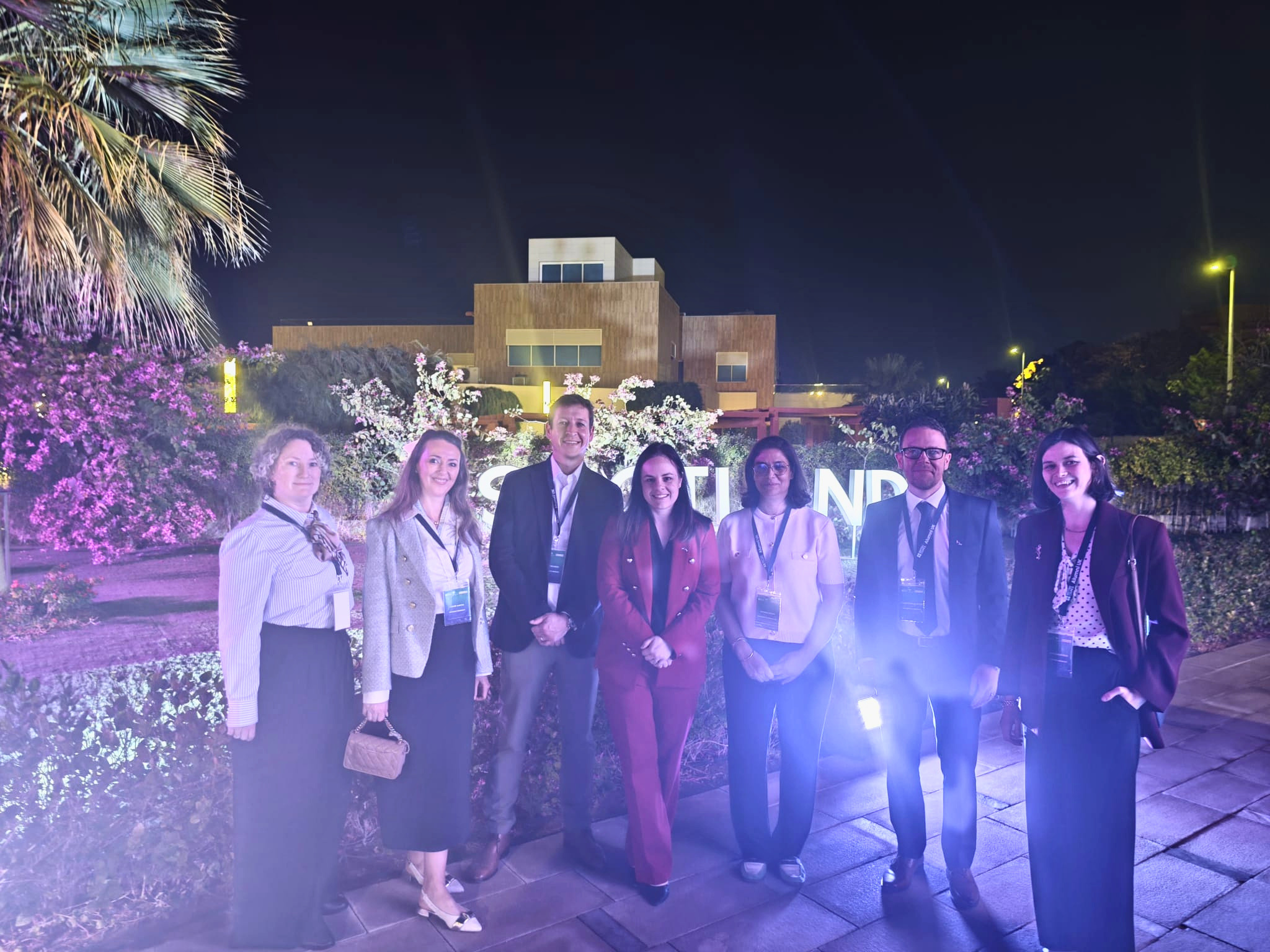

Louise Martin holds a degree in health science from the University of Aberdeen. Her first graduate role placed her inside NHS Grampian's public health department, and a few months in, her manager asked for a volunteer to cover placements across oil rigs and prisons. Louise put her hand up, the only person on the team who did, and that placement turned into more than a decade spent working inside some of the most demanding, isolated work environments in the world.
Flying out to platforms and vessels as an auditor, she started noticing something specific about the people she was meeting. The wellness programmes available at the time had been designed around what a standard day of someone at the headquarters would look like: regular hours, home every evening, colleagues down the corridor. Offshore crews lived a completely different reality, and Louise saw engagement drop every time one of those programmes reached a remote site. She watched it happen on trip after trip, and it became the starting point for everything RigRun would become.
From consultancy to product
At 25, Louise left the NHS and began writing to company doctors at major corporations like Shell, offering her services as an independent consultant. She got a positive response and founded Innovative Health Solutions, eventually building a team of specialists across nutrition, personal training and psychology. Further, she trained herself in resilience and mindfulness through the Centre for Stress Management and the University of Aberdeen.
Consulting in this capacity, however, meant flying out to sites one visit at a time, with every session needing a helicopter seat and space on the rig itself. Louise wanted her vision to reach far more people than this given model could support, so she began building a digital version of the programme that crews could carry with them. It started on paper, with sites faxing results back. USB transfers came next. Then in 2020, once Wi-Fi reliability had improved across remote sites, RigRun launched as a holistic solution that could be used on Apple as well as Android. Louise has since studied digital health, machine learning and AI at MIT, and that training is now shaping the product directly.
A model built on earning trust twice
RigRun runs on a combined B2B and B2C model, with close to 10,000 end users now across the energy and shipping sectors. Louise built it this way deliberately. Employers fund the platform, but it only earns its place if the people using it every single day actually want to open the app. That design choice keeps RigRun answerable to the person on the ground, not just the company paying the invoice, and it's shaped nearly every product decision since.
"There's nothing wrong with that initial business idea, because that's often what gives you the deep domain experience that leads you to the place where you can set up a global, scalable business."
Ask Louise what problem RigRun actually solves, and she starts with the shape of the job itself. Fly-in fly-out and drive-in drive-out crews spend weeks away from family, working in confined spaces at height, where a single mistake carries serious consequences. There's no weekend to recover on a rig, so fatigue builds cumulatively across a rotation instead of resetting each week. The isolation runs deeper too. Most crews aren't going home to their families each evening, and Louise ties that directly to worse mental health outcomes and safety performance on site. Rather than build individual health tracking alone, RigRun designs community into the product itself. Community doesn't happen naturally out there, Louise says. It has to be built by design.
"We're not just looking at individual health improvement; it's about the structure of what we do, actually building a community. Communities don't happen just by themselves. They have to be deliberately designed, and effort made into them." -Louise Martin, Co-Founder, RigRun
Building for a global market from day one
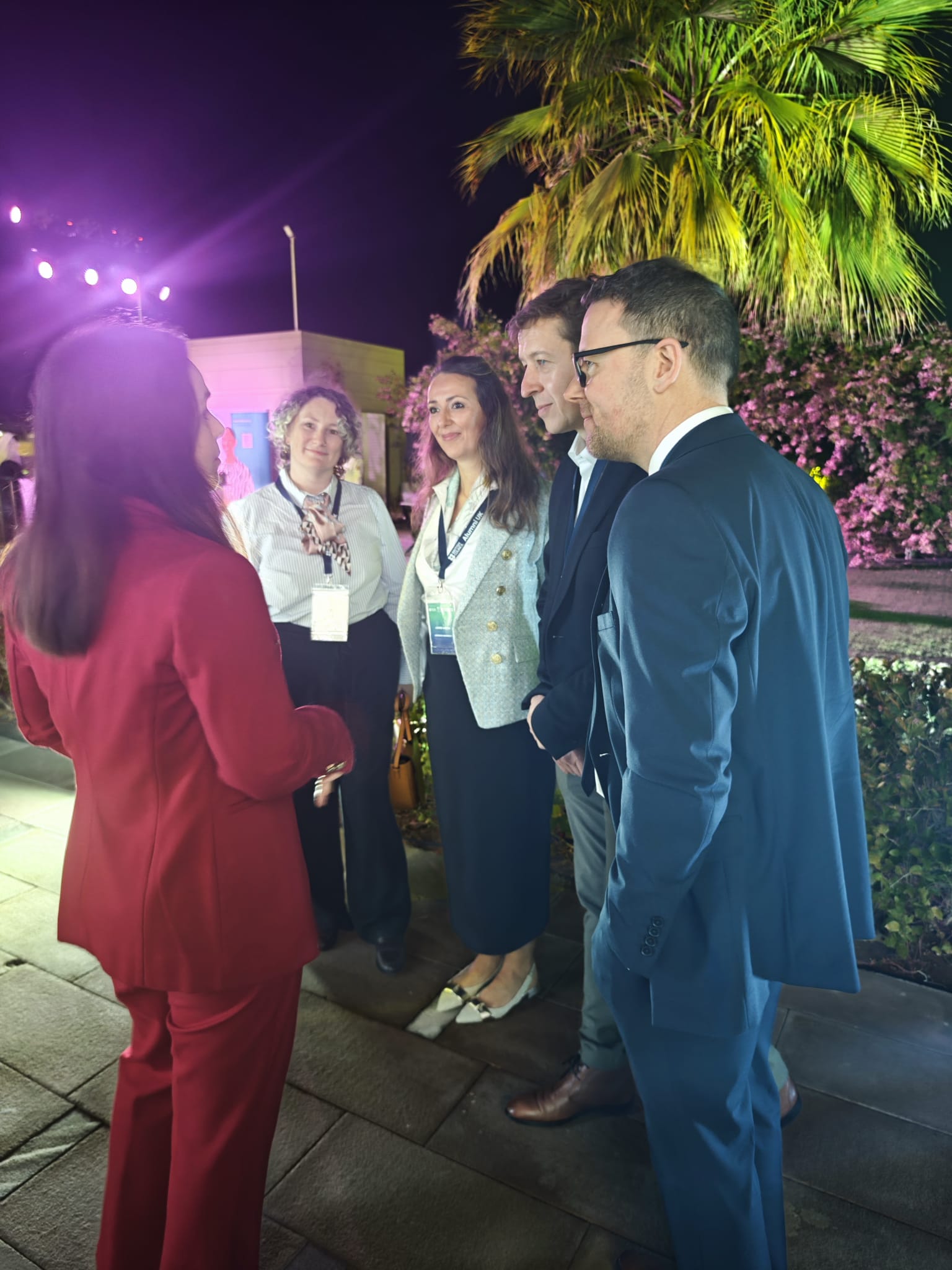
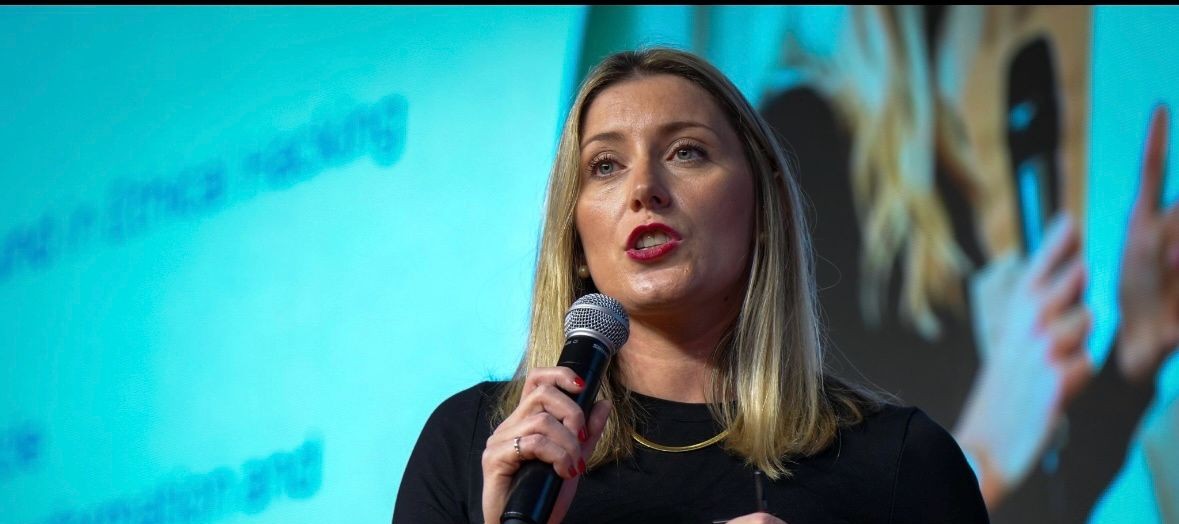
Through Techscaler, Louise joined a delegation of six Scottish companies on a market engagement mission to Abu Dhabi, a market she says she wouldn't have approached solo with the same confidence, especially stepping into a new region as a female founder for the first time. The trip meant cultural context, introductions to government contacts, and the kind of grounding that bolstered many next steps, including a speaking slot at the SPE HSE Conference in Abu Dhabi.
The trip came with practical grounding too. Louise realised that the tech itself needed work. Louise realised that some of what RigRun had built for its existing markets didn't automatically hold up against Middle East requirements around data security and data residency, and the team came back and started aligning the platform to those standards directly. It wasn't a small adjustment. It meant going back into systems that were already live and rebuilding parts of them to meet a different regulatory bar.
Her advice to anyone eyeing international markets is to build with that end market in mind from the very start: GDPR, data residency requirements, ISO 27001 compliance, the kind of groundwork that's far easier to lay early than to retrofit once a client is already asking questions you can't yet answer.
"If it's technology, you need to be thinking about GDPR. You probably need to be setting your tech stack up in a way that's compliant with ISO 27001. If you have to go backwards, you're creating more work for yourself effectively." - Louise Martin, Co-Founder, RigRun
Mentorship under the Techscaler umbrella of offerings added a further layer of support for Louise. Andrew, an Entrepreneur in Residence who had been through two exits of his own, introduced Louise to an investor based in Aberdeen. Louise wasn't raising at the time. Even so, the conversation gave her clear, practical advice on share structures and shareholding, territory she describes as easy to get wrong if you take on a co-founder without proper guidance. A second mentor with deep Middle East experience connected her directly with company doctors at major energy firms in the UAE, giving her a grounded picture of regional health priorities before she went in with any kind of pitch.
"Being awarded a place on that programme was fantastic, because you're with a group of people, you've got the Techscaler people there with you, and they were helping you to acclimatise, as it were. They're teaching you the cultural nuances. They're introducing you to the right people, the government out there. So you're making important connections, and you feel safe because you've got that base to go back to." - Louise Martin, Co-Founder, RigRun
Bringing technical leadership in-house
For years, RigRun outsourced its development work. A sensible starting point, Louise says, for a founder without a technical background who needs to protect the business from carrying full-time salaries through quiet periods. It only works if the contracts are airtight. Louise is direct about the need to secure IP agreements and run proper due diligence on any third-party developer, since ownership of the code itself can get murky if that groundwork is skipped.
RigRun eventually brought development in-house with their CTO, Mark, who had built the company's original tech stack years earlier and reconnected with Louise through a mentorship panel. Knowing him already removed much of the usual risk of a technical hire. The bigger shift for Louise was personal.
"It feels far less lonely. When you're the only C-suite person, it can be a lonely place to be. You don't have a boss to go to and ask what you should do here. A problem shared is a problem halved." - Louise Martin, Co-Founder, RigRun
Building the company she'd have wanted to work for
RigRun holds B Corp certification, scoring highly on a process Louise describes as genuinely rigorous. Part of that framework ties directly into the product. As users hit health milestones, RigRun contributes to environmental initiatives like ocean plastic removal and tree planting. For Louise, human health and planetary health were never separate problems.
The other policy she's built with real intention is flexible employment, and it comes from somewhere personal. Louise ran her own business through the years she had young children, which gave her a flexibility most employed women don't get. But she also lived what she calls the mom tax firsthand: the years spent raising children read, to funders and grant panels, as a gap or a stalled business rather than what it actually was. Women are also increasingly having children later, which means many grant and funding schemes built around certain age brackets end up working against exactly the founders who'd benefit most from them.
Louise built RigRun's employment policies around that reality rather than around the standard nine-to-five template. Roles get shaped around the person, not the other way round. That might mean term-time hours for a parent, or built-in flexibility for when a child is sick. As circumstances change, people can scale their hours up over time, moving toward full-time only when it actually suits their life to do so.
It's a small operational detail on paper, but it reflects something bigger about how Louise has approached the whole business: build for the reality people are actually living, not the reality a process assumes they're living. That instinct carried her from an offshore audit to a global health platform, and it's the same one she'd pass on to any founder starting from a similarly unconventional first idea.
"You should join the CodeBase programme. You will meet other founders going through the same as you, often having overcome some of the challenges you are facing, so can help you with them. You will also get to be part of a dynamic and friendly organisation that will support you in the right way at the right time." - Louise Martin, Co-Founder, RigRun
Become a Techscaler member today. Join here.

.png)




.png)


