


Rowen Strachan is a Community Manager for CodeBase and Techscaler, supporting founders to access mentorship, connections, and growth opportunities.
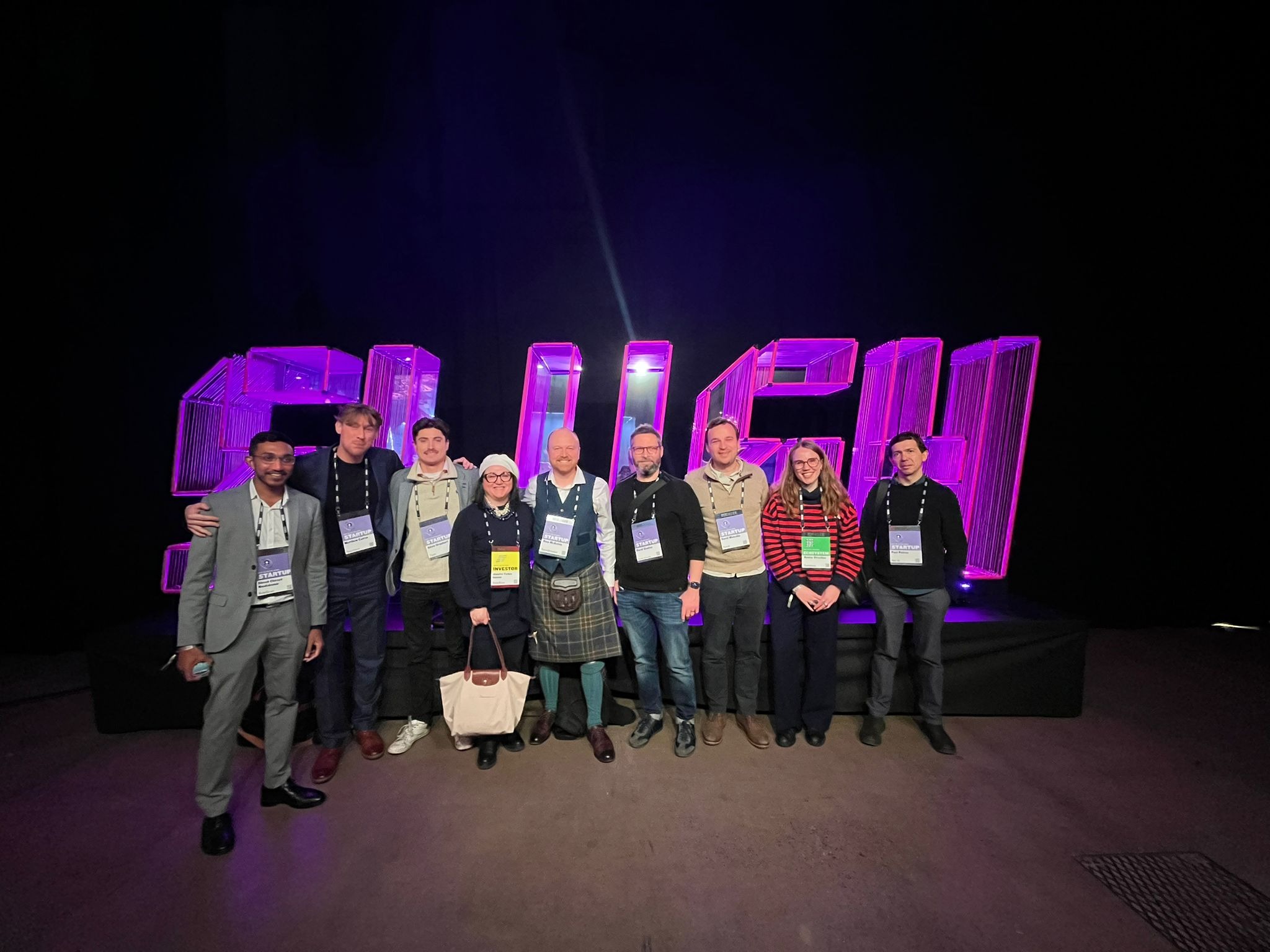
Rowen attended Slush alongside a cohort of nine Techscaler Founders:
David Malcolm, Optab - A commercial intelligence Copilot for construction that uses AI agents to validate payments, benchmark rates, and surface commercial risk for better project control.
Matt Cairns, Reactions - An AI platform that helps people with moderate to severe allergies track symptoms, identify triggers, and develop personalised strategies to reduce reactions.
David Skulina, Playable Technology - Develops interactive software and hardware products in music technology, accessibility, and education.
Ross McKelvie, Swordbreaker Limited - A cybersecurity startup pioneering new defences against ransomware attacks.
Paul Patras, Net AI - Transfers mobile networking and AI research into commercial products, using deep learning to solve complex problems in the mobile networking domain.
Shivoh Chirayil Nandakumar, RideScan - A deep-tech startup developing AI technology for independent risk-scoring and anomaly detection to make robots safer and more reliable at scale.
Adam Urquhart, Tiplo AI -A healthtech startup transforming physiotherapy through AI and motion-sensing technology to make musculoskeletal rehab accessible and data-driven.
Shuli Yu, Yush - A mobile-first platform that captures instant visual reactions at events and turns them into same-day insights and shareable social proof.
Kayla-Megan Burns, Podplistic - Transforms podcasting workflows for tier-1 media organisations using AI while safeguarding journalistic integrity.
Rowen’s Takeaways
Last month, I joined the Techscaler cohort at Slush in Helsinki and there were a few key takeaways from the event that have helped shape how I think about building startups, that I will take with me into 2026.
For context, Slush isn't your typical tech conference. It's a not-for-profit event supported by around 1800 student volunteers, many of whom want to become founders themselves, or have an active interest in the tech ecosystem. That energy is infectious. You feel it the moment you arrive: 13,000 attendees, mostly startups and investors, gathered in a city that somehow makes freezing November weather feel exciting.
But beyond the buzz, I came away with five insights that have stuck with me, that may also be relevant to Scottish founders.
1. The AI Conversation Has Moved On
At Slush, no one was asking "what is AI?" or "should we use AI?" That debate is over and long gone. The assumption now is that everyone is using AI, so it's no longer a differentiator or competitive edge.
Instead, the conversations have shifted to: How does AI really create better customer value? What are the strategic implications? What does regulation look like? And critically: What comes after integrating AI?
This was a stark contrast to events back home in Scotland, where we're often still stuck on the basics. If we want to compete on a European stage, we need to catch up and fast.
2. Community Is the Competitive Advantage
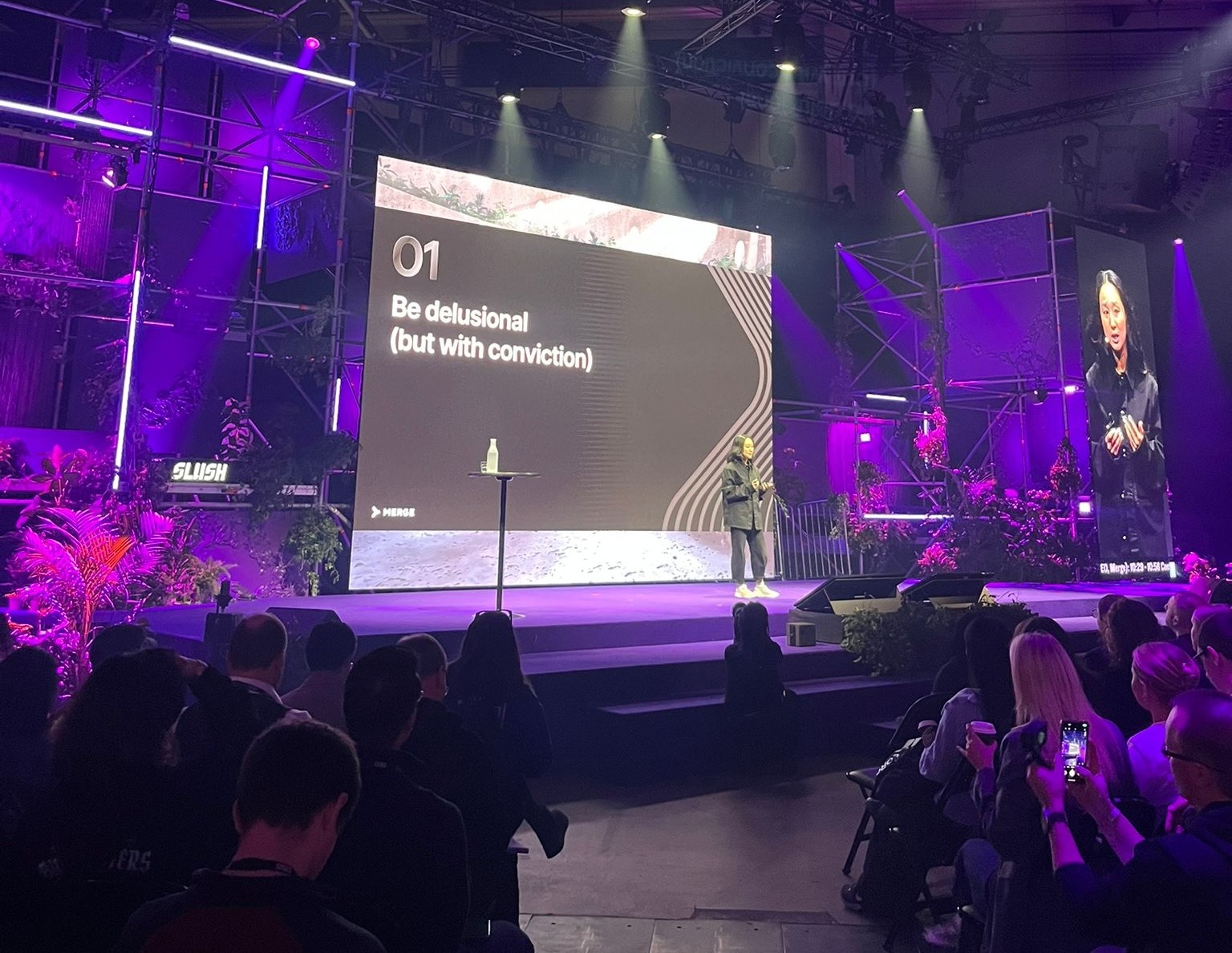
One of the best talks I attended was Cult Is How You Win by James Hawkins. His core message? In 2025, your competitive edge isn't AI - it's people.
Community, authenticity, and customer focus are what drive long-term success. And Slush itself is proof of that. Those 1,800 volunteers? They're not just helping run the event, they're being immersed in the ecosystem, seeing startup-building as accessible, and many go on to become founders themselves.
It's a brilliant long-term play: invest in students early, create a culture of engagement, and build the next generation of entrepreneurs from the ground up. Scotland could learn a lot from this model.
My key takeaway? Startup challenges are universal, regardless of product or geography. This reinforced the immense value of a strong local network. Learning from peers who are fighting the same battles is the best foundation for building a truly global business. Ross McKelvie, Swordbreaker
3. Brand Isn't a "Later" Problem
I also attended a brilliant session with Musa Tariq, the former brand lead at Apple, Airbnb, and Nike. His message was clear: brand = behaviour + story, and it needs to be built from day one.
He gave us a simple test: Imagine a Nike hotel, you can instantly visualise it. Now imagine a hotel brand that you are familiar with has created a trainer. You can't, that's the power of distinctiveness.
Musa encouraged founders to do this exercise: ask people for three words that describe you. Look for common threads, that's your personal brand. If nothing overlaps, it is clear that you may be people-pleasing too much, and could focus more on what you want to bring to the table. Then do the same for your company.
The kicker? Your DNA as a founder is your brand. Identify your "lemonade stand moment” (the earliest roots of why you build things) and weave that into your story. It’s not just marketing nonsense, it’s strategic.
4. EU Regulation Is Holding Us Back
This came up again and again: the sentiment that EU regulation is hindering innovation more than helping. Multiple speakers, and several Scottish attendees I spoke with, emphasised that Europe needs to either loosen its grip, or better collaborate across its borders if it wants to compete globally.
It's a tough pill to swallow, but we need to get the balance right, and fast. How can we keep people safe, protect data, and also drive innovation, working together to create a solution that helps unify the European market, rather than fragment it further.
5. Funding Isn't One-Size-Fits-All
Marcus Räder gave one of the most practical talks I've seen on choosing the right funding model. He broke down bootstrapping vs. venture capital vs. alternative models with brutal honesty, no sugar-coating, just clear pros and cons.
Founders need this kind of transparency when making decisions that will shape the next five years of their business. Choosing the wrong funding model can have devastating implications on both a professional and personal level. But get it right, by reflecting on the pros and cons that really work for you, and you are all the more closer to success.
“The event was an eye opener, with great talks by people who have been there and done that, unparalleled access to investors and advice” - David Skulina, Playable Technology
Slush reminded me that building a startup isn't just about your product or funding model, it's about the ecosystem you engage with, the culture you develop, and narrative you choose to share. Scotland has incredible founders, but we need to raise our ambitions, move faster on AI, and build intentional communities.
If you get the chance to go next year, take it. And bring a warm coat.
Rowen Strachan — Community Manager, Edinburgh and Lothians
Rowen supports founders to access mentorship, connections, and growth opportunities. She began her career in a tech startup as a campaign and events manager before moving on to a Global Events Manager role with LexisNexis, bringing together legal professionals from around the world. With a background in Chinese Studies and marketing, Rowen has a passion for building international connections and fostering inclusive communities.
Become a Techscaler member for free today to get access to programmes like this in the future.