

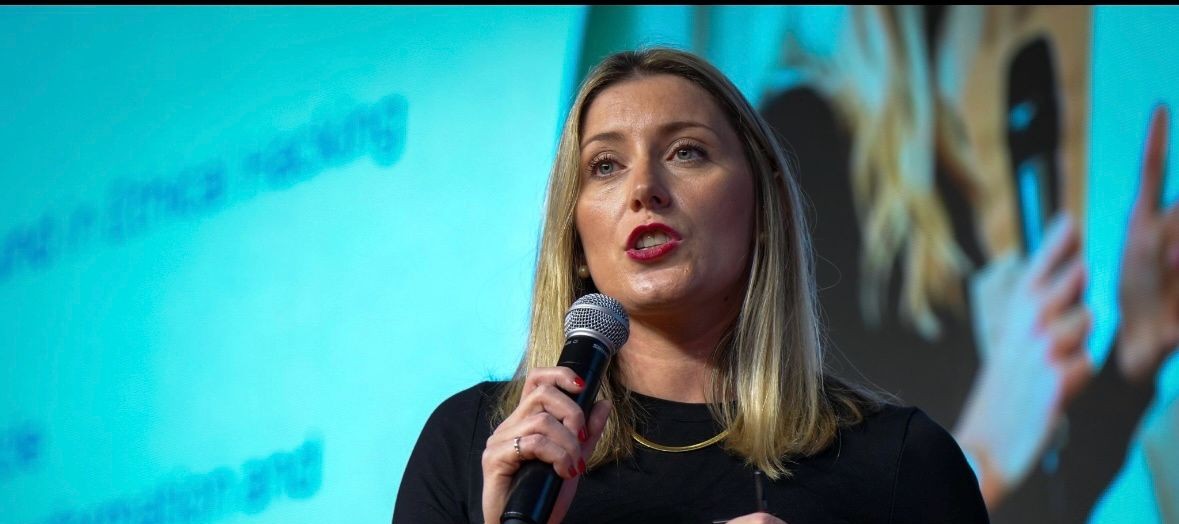

Neon Guard is transforming cutting-edge research into a scalable product, aiming to make the internet safer through dynamic age assurance. Founded by cybersecurity specialist Chelsea Jarvie - whose experience spans corporate, financial services and government - the company builds on her PhD research into dynamic, privacy-preserving age intelligence. That work now underpins Neon Guard’s mission to commercialise age intelligence technology and create safer digital environments at scale.
Building safety into the internet
Neon Guard operates at the intersection of cybersecurity, AI and regulation - a space that is becoming increasingly important as governments and platforms grapple with online safety. The core challenge is simple, but difficult to solve.
Age is a critical signal online - from a regulatory, legal and safety perspective - but current systems rely heavily on one-time verification methods.
“These static checks don’t go far enough,” Chelsea explains. “After that one-time check, nothing really happens.”
Neon Guard is designed to move beyond that.
Instead of a single verification moment, the platform enables dynamic, continuous age-appropriate experiences, ensuring users interact with digital services in ways suited to their age.
The goal is to make online spaces safer without compromising privacy or usability.

From research to real-world impact
Neon Guard wasn’t originally intended to be a business. During her PhD, Chelsea developed a system combining custom AI models to estimate whether a user is an adult or a child. When the final integrated system produced results in line with industry standards, the opportunity became clear.
“At that point, I thought - maybe I’ve really got something here that’s worth bringing to the world.”
At the same time, becoming a parent shifted the stakes.
“What started as an interest in cybersecurity became something much more personal. I felt a responsibility to make the online world safer for my children.”
Following the completion of her research, Chelsea worked with her university to transfer the intellectual property and begin the process of building a company around it.
That transition marked the start of Neon Guard’s journey as a startup.
Navigating the early-stage reality
As a deep tech, early-stage company, Neon Guard faces many of the common challenges of building a startup - but often with greater complexity and longer timelines.
As a solo founder, Chelsea is balancing multiple priorities at once - developing the technology, raising investment, forming partnerships and building a founding team.
“I don’t have customers because I don’t have the MVP. I don’t have the MVP because I don’t have the team. I can’t build the team without funding”.
This kind of cycle is common in early-stage startups, but particularly pronounced in deep tech, where development timelines are longer and technical complexity is higher.
Fundraising has also been a significant challenge.
“The level of rejection is unreal,” Chelsea says. “I’ve had investors say they don’t believe in the tech, don’t believe customers will use it, or don’t think it can work in a regulated space.”
Despite this, conviction in the technology remains a constant driver.
[Quote] “I truly believe in what this tech is capable of. That’s what keeps the fire burning.”
The role of Techscaler and VBI
As Neon Guard began to take shape, both CodeBase’s Techscaler and the University of Edinburgh’s Venture Builder Incubator (VBI) programmes played important - and complementary - roles in Chelsea’s journey, supporting different but equally critical aspects of building an early-stage deep tech company.
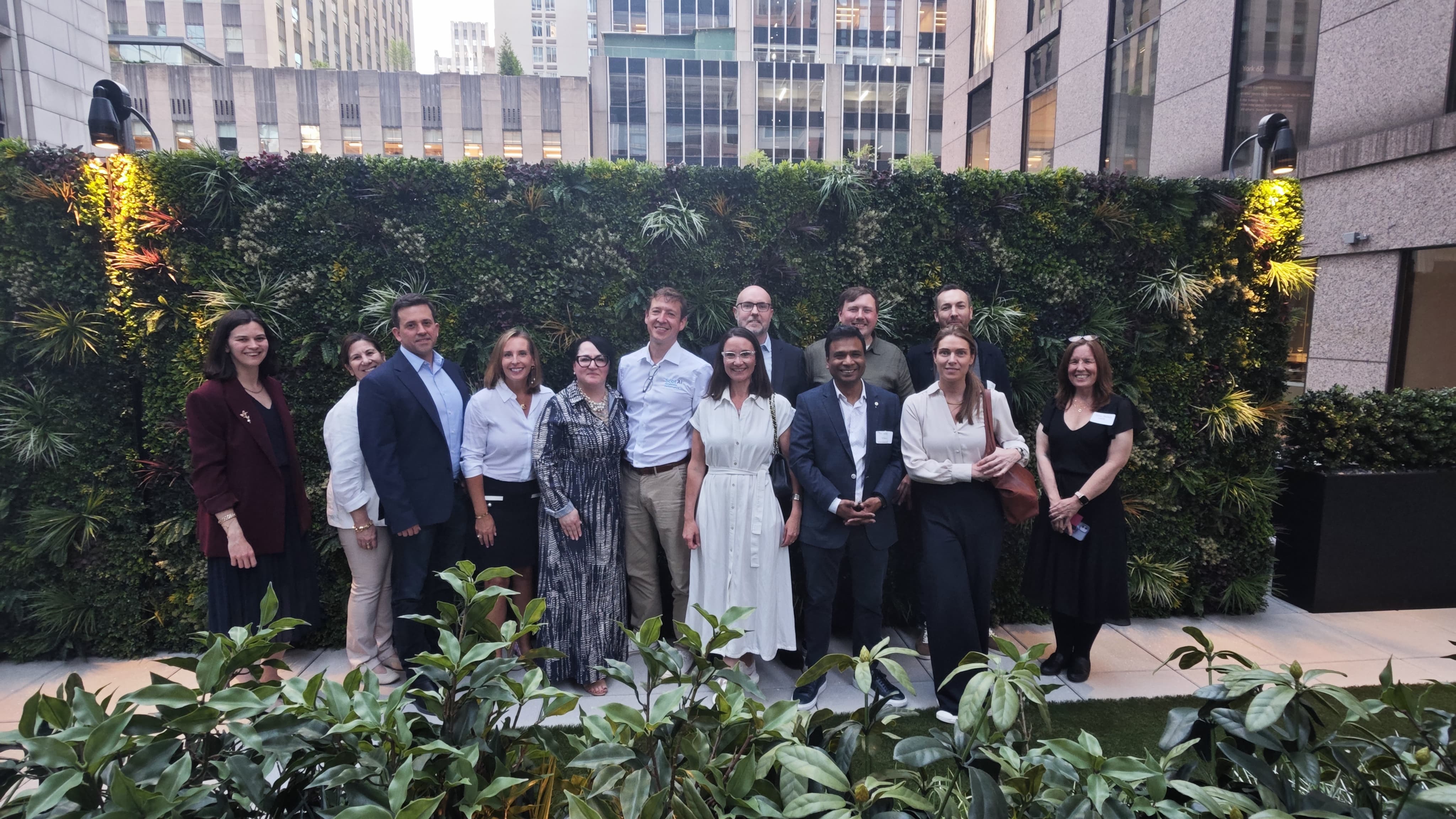
Chelsea first engaged with Techscaler through the ecosystem, following a recommendation from advisor Mark Logan. She went on to join Techscaler’s Silicon Valley cohort - an experience that proved pivotal in shaping her approach to building Neon Guard.
Spending time in the US exposed her to a different level of ambition, pace and expectation.
“The trip was amazing and tough. It really pushed me to think globally about what Neon Guard could become.”
Through Techscaler, Chelsea was able to test and refine how she communicated the business in high-pressure environments. Her pitch was challenged repeatedly - helping her sharpen both the narrative and the commercial positioning of a complex deep tech product.
“My pitch deck got ripped to shreds - in the best way. It’s so much stronger now.”
Beyond the pitch itself, the programme created opportunities to build meaningful connections. Chelsea pitched at events while in Silicon Valley, connected with potential investors, and brought on new advisors who continue to support the business. Many of these outcomes didn’t happen immediately, but developed over time through introductions made during the trip.
Crucially, Techscaler helped shift mindset as much as capability.
At an early stage - before an MVP was fully built - the experience validated that engaging with global markets early can accelerate decision-making, open up new opportunities, and prevent founders from thinking too narrowly about what their business could become.

Alongside this global exposure, VBI provided a structured environment to build the operational foundations needed to support that ambition.
Delivered through universities, the programme focused on key areas such as financial modelling, recruitment, and preparing for investment - all essential for translating a deep tech concept into a viable, fundable business.
One of the most impactful areas was learning how to position and communicate a technically complex product.
“In deep tech, you can’t always quickly get to product. So how you tell that story - how you market and raise - becomes really important.”
VBI also offered access to a peer network of founders, creating space to share challenges, compare experiences, and build a support system - particularly valuable as a solo founder navigating uncertainty.
Both programmes also culminated in showcase opportunities, helping Chelsea increase visibility, test her messaging in front of investors, and build early traction.
Together, Techscaler and VBI supported both sides of the journey - expanding ambition, networks and global perspective, while strengthening the fundamentals needed to execute effectively at an early stage.
Building momentum
Despite being at an early stage, Neon Guard is already building momentum.
Chelsea is currently focused on:
- Building out a founding team aligned with the mission
- Developing an MVP for pilot deployment (targeting Q3–Q4)
- Securing early partnerships with platforms focused on safety
- Raising pre-seed investment
At the same time, the company has begun gaining recognition through programmes, showcases and competitions - including winning funding from multiple events in a single day.
These early signals point to growing interest in both the problem space and Neon Guard’s approach.
How community supports the journey
A consistent theme throughout Neon Guard’s journey is the importance of community, mentorship and access.
Programmes like Techscaler and VBI provide structured support, but also something less tangible - exposure to other founders, new ideas and different ways of thinking.
For early-stage founders, that combination can be critical.
“You can spread yourself too thin across programmes,” Chelsea notes. “What matters is choosing the ones that give you the right connections, learning and opportunities to share your message.”
Growth and Milestones Highlights
Neon Guard has reached several key milestones:
- Development of proprietary AI-based age assurance technology through PhD research
- Transition from research to commercial startup with full IP ownership
- Participation in Techscaler’s Silicon Valley cohort
- Completion of VBI programme and showcase participation
- Expansion of advisory board through new connections
- Early investor conversations and pre-seed fundraising in progress
- Initial funding wins through competitive startup showcases
- MVP development underway with pilot targets for 2026
Neon Guard’s journey reflects a broader shift in the startup ecosystem - where deep tech research is increasingly being translated into real-world products.
While still early, the foundations are in place: strong technical innovation, clear market need, and growing support through programmes, networks and community.
Through the combined support of Techscaler and VBI, that transition from research to startup is already well underway.
Get involved
VBI is able to be delivered across universities throughout Scotland thanks to Techscaler, including at the University of Strathclyde, where Chelsea completed her PhD.
For founders looking to turn research into real-world impact, VBI offers structured learning, community and access at a critical stage. Applications for the next cohort are opening very soon - find out more here.


.png)

.png)

.png)





.png)


