

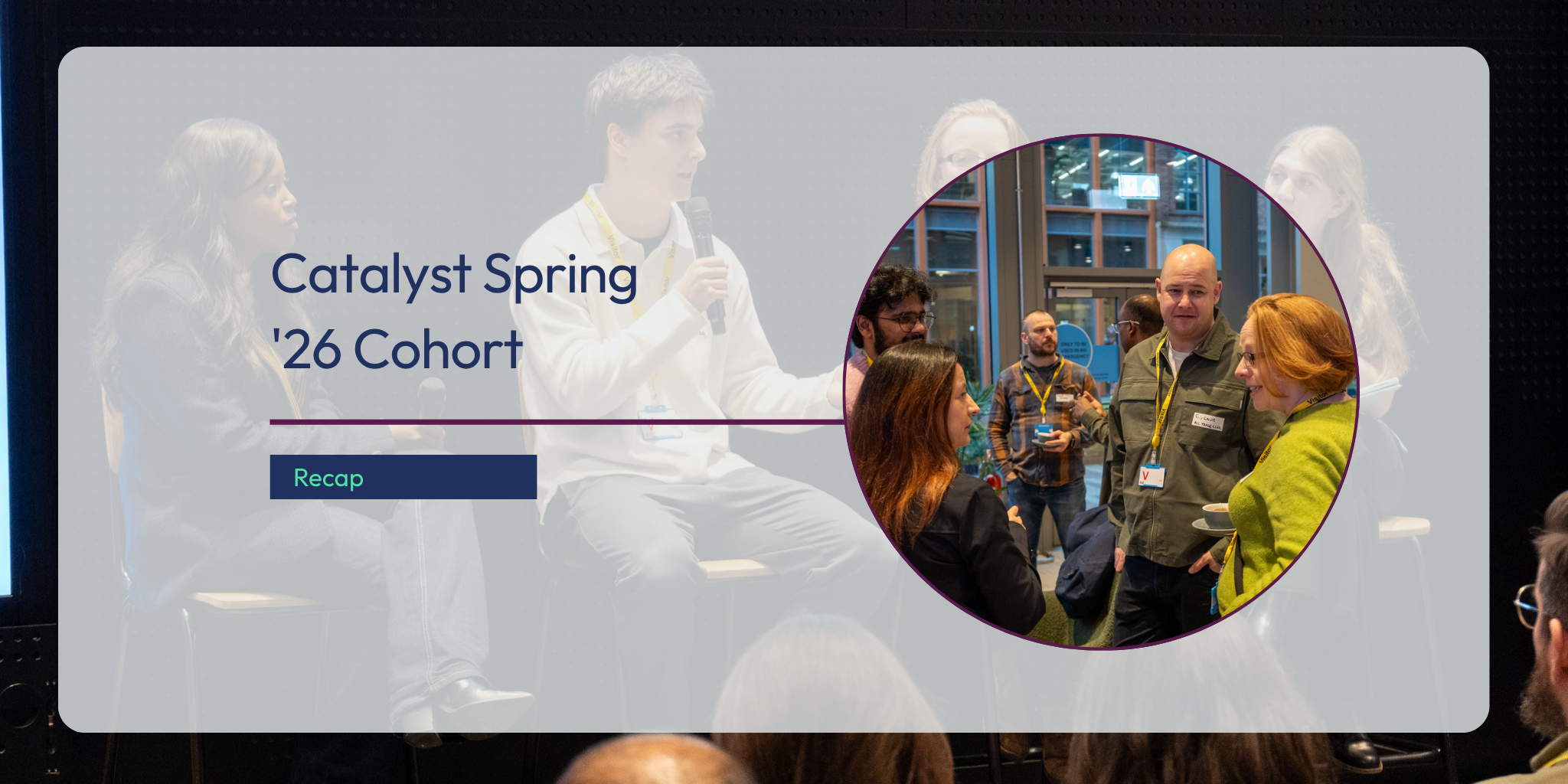

Most founders arrive at the start of any programme with the same mix of things: a problem they believe in, a rough idea of who it's for, and a lot of questions they haven't quite figured out how to ask yet. Catalyst was deliberately built around that moment. The twelve weeks that followed for the Spring '26 cohort weren't about moving fast for the sake of it. They were about giving the 94 strong cohort the frameworks, the honest feedback, and the right people in the room to actually test whether what they were building held up.
Built Around How Founders Actually Work
There's a reason Catalyst doesn't open with pitching. It opens with problem discovery, because that's where most early-stage companies quietly lose months. The instinct to skip ahead to revenue models and investor decks is understandable, but it's also where a lot of founders end up solving the wrong problem with real conviction. The programme was structured to work against that instinct.
The eight core workshops followed the sequence a company actually has to navigate: getting the problem statement right first, then understanding the market and the customer deeply enough to build something worth building, then moving through solution design, going live, revenue experimentation, sales, operations, and pitching. The order was deliberate. Each session was designed to land at the moment a founder genuinely needs it.
The practitioners who delivered it mattered as much as the structure itself. Rob Gelb and Simon Greany brought rigour to the discovery work that set the tone early. Moe Hanafy's session on revenue and business model experimentation gave founders the language to think clearly about commercial viability before they were too far down a path. Fraser Wilson on founder-led sales cut through a subject most early-stage founders find uncomfortable and made it practical. These are people who've used the frameworks they brought into the room.
For the 12 companies on Raise, the programme ran deeper still. Three dedicated workshops on growth strategy, funding strategy, and investor readiness ran alongside the core curriculum, supported by 10 weeks of Entrepreneur in Residence engagement that gave fundraising founders a sustained relationship with experienced operators across the full programme duration. For companies at that stage, the difference between a single feedback session and ten weeks of ongoing support is significant.
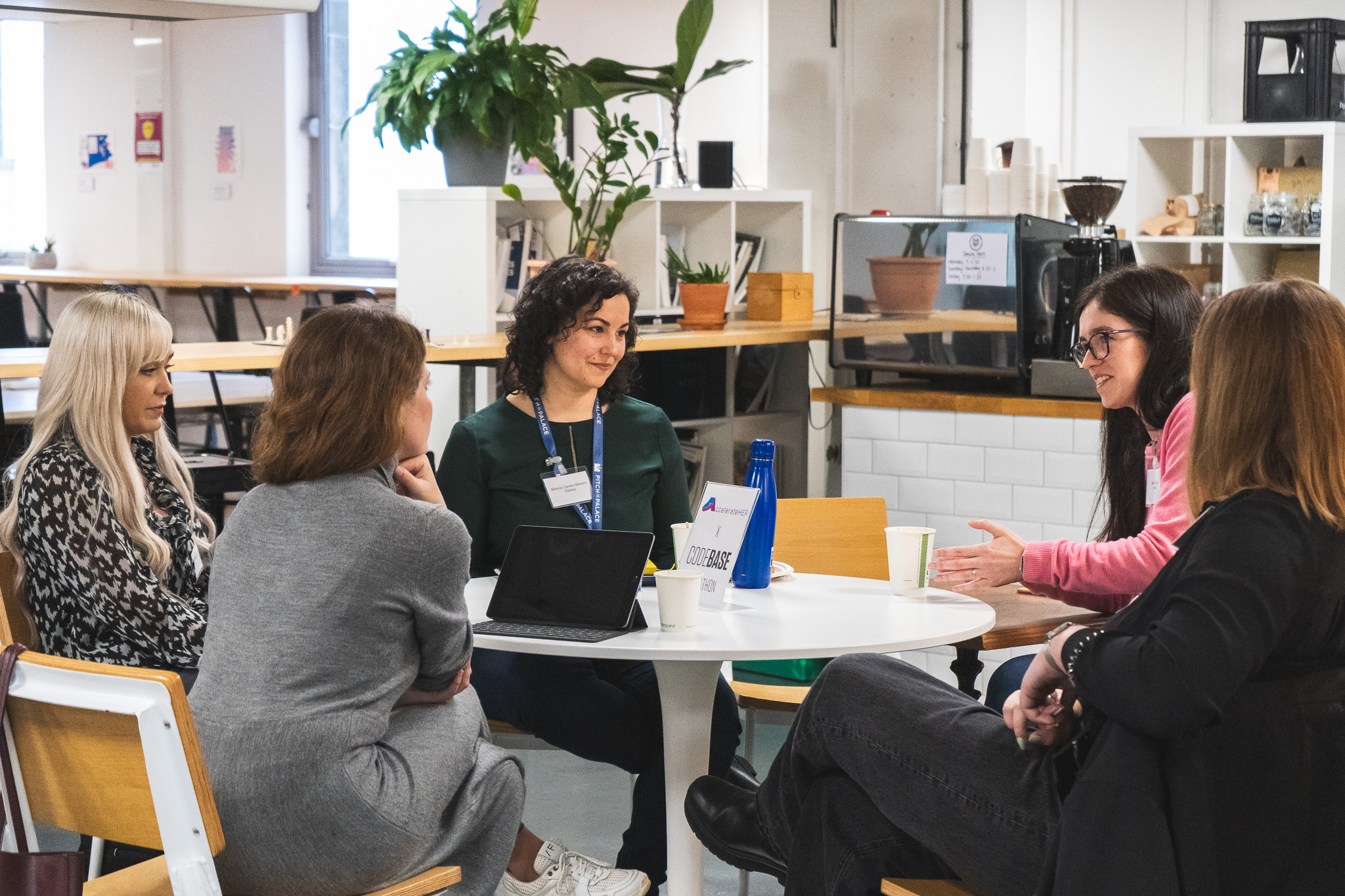
The Refine track offered its own layer of structure: five group mentorship sessions for companies that needed more time to pressure-test their foundations before moving forward. And three in-person events across Stirling, Edinburgh, and Glasgow created the conditions for something a curriculum alone can't manufacture. Several founders continued building relationships well beyond the formal sessions. One met a potential co-founder at a Catalyst event. Another received a referral through the Visiting Entrepreneur network that has since progressed into a potential proof of concept opportunity.
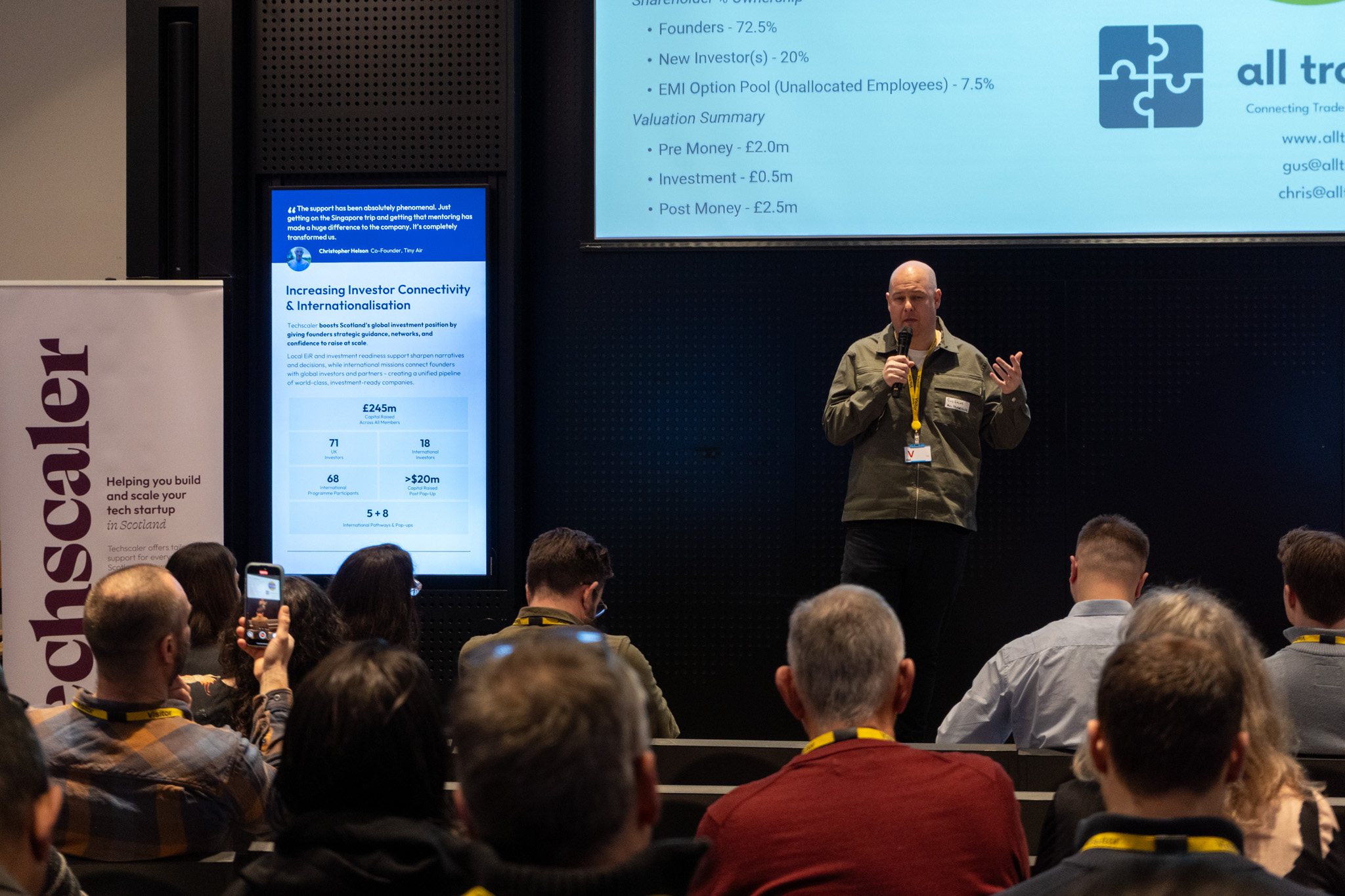
What the Cohort Built
Progress at the early stage rarely looks the same twice. Some companies arrive needing to validate a problem they've been sitting with for months. Others have a product in hand and need to figure out who it's actually for and how to reach them. The Spring '26 cohort reflected that range, and where they landed by the end of the programme reflected it too.
Here's a picture of where some of the cohort companies were by the close:
- Spectrum Wear Labs (now Proxima Wear) pivoted and repositioned their offering, assembled a five-person advisory board, received an invitation to apply to STAC, and initiated an MVP development project with the University of Strathclyde.
- Rail Geospatial ran structured validation sessions with a live client, found the value proposition needed reworking, rebuilt it around that feedback, and moved back into active client engagement with a revised MVP.
- Fur-Ever Ltd registered the company, secured SEIS approval, completed their ICO registration, acquired numerous beta testers, and stress-tested their pricing to reach a cleaner, more confident revenue path.
- Dikoka Health Technologies used ongoing client feedback to sharpen their understanding of operational pain points, refined their market positioning, and began building more structured processes to support growth. Referral-driven interest in the platform was already creating onboarding conversations for a new client by the programme's end.
- Anansy sharpened their proposition from a broad concept into a focused B2B infrastructure play, validated the problem through sector research and stakeholder engagement, built early momentum with potential channel partners, and began preparing for pilot readiness and funding.
- Locaperk launched their MVP to live users, reached the semi-finals of Scottish EDGE, secured a development cohort commitment from a national credit union body, hired their first software engineer, and opened pre-seed investor conversations.
- Take A Load Off Ltd executed a successful pivot, built their new product from scratch, and finished with a live pilot running with 50 users, early angel interest, a completed financial model, and a development team in place.
- Ascendrix Systems Limited launched their first products during the programme and used mentorship and cohort input to reassess their market focus, acquiring paying customers in the process.
- Fesutibaru used the programme to rebuild their cold outreach approach, refine their pitch deck, revisit their market sizing, and overhaul their operational foundations. A returning Catalyst participant, their assessment was simple: "Both (Catalyst Cohorts) have been excellent."
- Pointcanvas sharpened their customer acquisition strategy and devised a pricing approach for custom API implementation. A Visiting Entrepreneur introduction led directly to a meeting with a publicly listed company, with negotiations underway at two by the programme's close.
- CCS Ecosystem built a testable MVP, launched an official website, and moved from a primarily technical concept to a clearer commercial proposition targeting a specialist industry audience.
"The programme has significantly strengthened my confidence in both the problem we are solving and our ability to execute. Through customer conversations, product iteration, and feedback from mentors and the Techscaler ecosystem, I now have a much clearer understanding of our market, positioning, and growth direction." Dikoka Health Technologies
The Role of Visiting Entrepreneurs
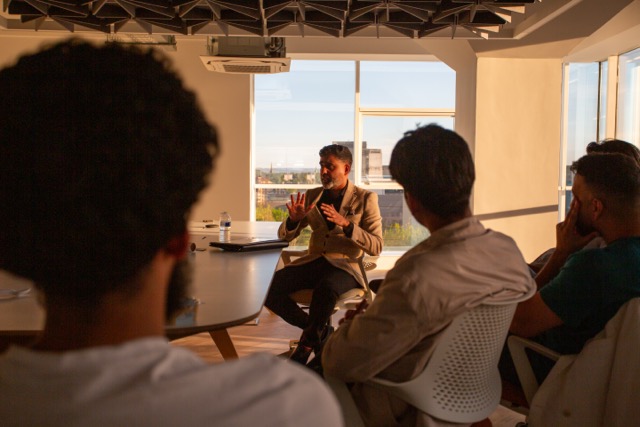
Across the cohort, the element that came up most consistently in founder feedback was the Visiting Entrepreneur sessions. Twelve weeks of sector-specific mentoring, strategic guidance, and direct founder support ran alongside the core programme, and the impact showed up in specific, tangible ways.
For Pointcanvas, a Visiting Entrepreneur introduction led directly to a client meeting with a publicly listed company. For Anansy, EIR encouragement to explore vibe coding led the founder to ship a working app over a single weekend, with no prior coding experience, something they described as a significant confidence shift in how they understood their own execution capability. For Rail Geospatial, the practical guidance on consultancy and product mix was, in their words, "spot on."
"They provided practical guidance, challenged my thinking, and helped me look at both ANANSY and my wider founder journey with more confidence and clarity. The engagement was not just useful for advice; it created momentum, opened doors, and gave me more belief in my ability to execute." Anansy
"Very useful for introducing me to a potential client and led to a meeting with a public company." Pointcanvas
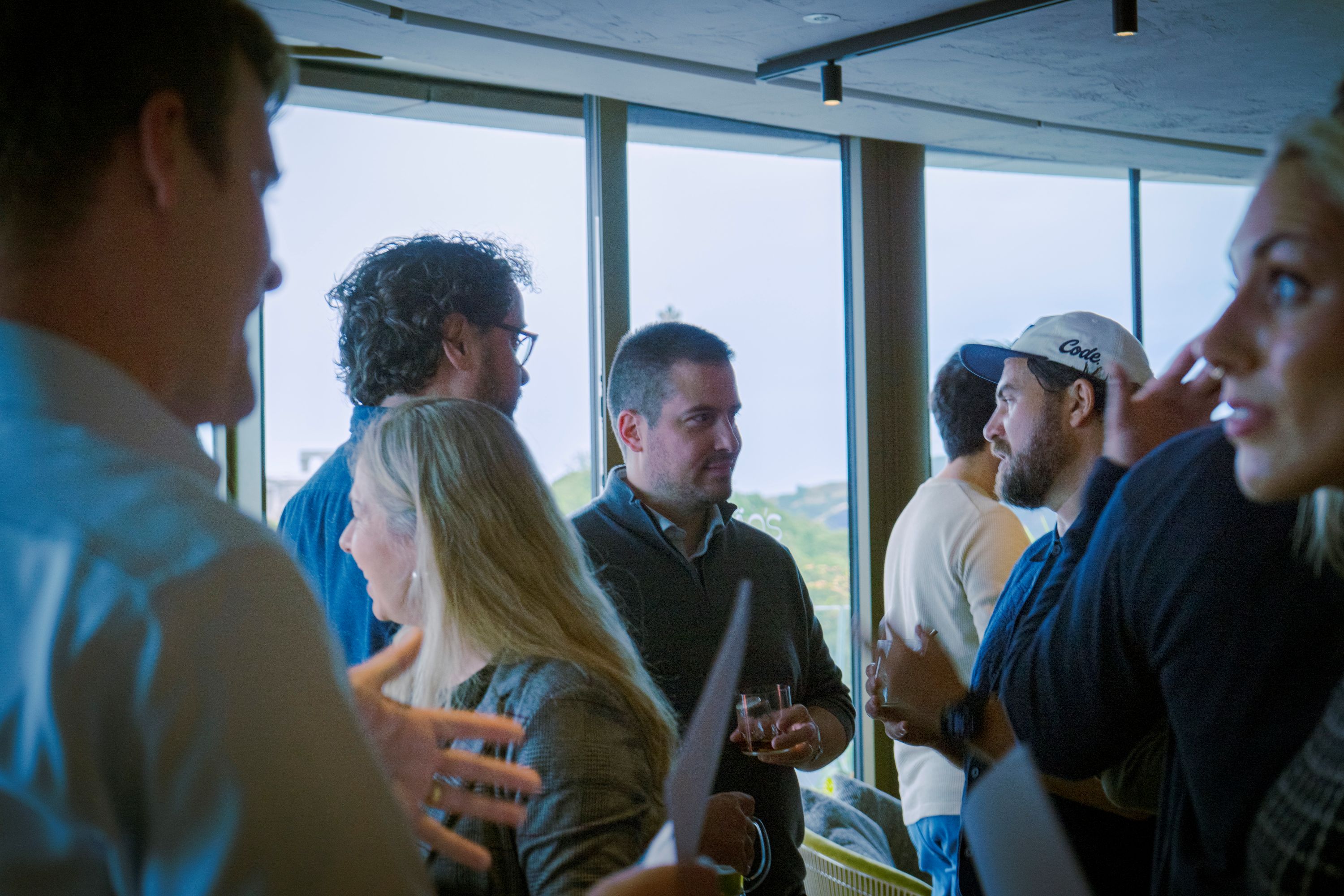
The three in-person events held across Stirling, Edinburgh, and Glasgow added another layer. Founders built relationships outside the formal session structure, one reported meeting a potential co-founder at a Catalyst event, and a referral through the Visiting Entrepreneur network is now progressing into a potential proof of concept opportunity.
Into the Broader Ecosystem
The cohort's momentum carried beyond the programme itself. Iniotech, a Catalyst participant in the deep tech space, was featured in the April edition of the Techscaler Ones to Watch Report. Several participating companies reached the semi-finals of Scottish EDGE, with GreenFlip, a Raise track participant, progressing to the final. With the Scottish EDGE finals now approaching, more of the cohort have the opportunity to build on what they started.
That visibility matters because Catalyst sits within something larger. It's a structured entry point into a wider network of support, introductions, and ecosystem connections that continues well after the final session.
Techscaler Catalyst is a Scottish Government programme delivered by CodeBase. Click here to know more about Catalyst.

.jpg)







.jpg)


