
In October 2023, James Rodgers, CEO of Fish Tin Games, was running a six-person studio in Dundee and could see where things were heading. The studio earned its living from work for hire, and with the games industry in a downturn, the trend pointed to a business that could no longer afford six salaries. Before the downsizing arrived, James and his co-founder Jamie Steele used the Halloween game jam to release a game that would give every member of the team a launch credit to carry forward.
That game was The Zhukov Line, a psychological horror set on a train in a Soviet dystopia, released for free and now holding a 97% positive rating on Steam. James calls the release pretty much a perfect way of gathering data on audience sentiment and on whether players had an appetite for that kind of game. The answer was yes, and the studio is now retelling the story in a new version. Five years in, Duncan, the Art Lead, completes the core team alongside James and Jamie, and the studio works with Ciaran, a programmer, as a contractor added through the Techscaler Games Cohort, with work-for-hire audio projects for other developers running alongside the game.
Two founders, one set of hats
James is CEO and Jamie, primarily a programmer, is CTO. In practice, they share the work across every area, with each putting in more time where they are better at a task or more interested in it. With two people making a game, they wear the hats a larger team would give to separate people: a creative director pushing for an original project and a producer keeping it within scope and budget. Those two should have healthy fights, and because James and Jamie hold both roles themselves, they work at each decision until both agree it is correct for the project and the company, whichever of them it came from. When one feels strongly, the other trusts that instinct. As musicians, they have worked on music together the same way.
When two founders share every hat, the working rule is the decision that is best for the project, whoever suggested it.
"So we've become really really good at finding the thing that is the best for the project or the best for the company, not what one person thinks is the best." - James Rodgers, CEO, Fish Tin Games
Where what you love and what sells overlap
Horror won because James and Jamie both love it. They have played horror games together every week for years, at a night they call Resi Night, so they know the genre as casual players and as critical ones. James puts the primary reason plainly: you need to want to make the thing, and it is their company, so the choice was theirs.
The second reason came as a bonus. Horror is an evergreen genre in games development, and as a theme it fits many types of game. Roughly half of a horror game's experience is sound and atmosphere, which suits a studio strong in audio and music. James describes the choice as a Venn diagram of what he and Jamie want to make, with commercial viability on top.
The overlap runs through the founders themselves. James came to founding as a natural progression from a habit of trying to excel across many areas, from video editing to music, and he calls game development the culmination of the arts. Jamie comes from a prolific traditional Scottish music family and takes core principles from one field into the next in the same way. Their strengths are broad enough that the place where their skills meet is where the studio's work comes from.
Wanting to make the thing comes first, and a genre with lasting demand is a bonus on top.
Fill the business gaps, then practise somewhere safe and visible
After five years of trading, James could see that the studio was strong at making games and short on knowledge of finance and production. In autumn 2025 he joined the SGDA Games Accelerator, where frameworks gave names to ideas he was already putting into practice, and the GameSpace Levelling Up programme followed straight after with similar content framed differently. The Techscaler residency came next, as the chance to apply all of that in a setting that was safe and still pushed the team to use it. In his view, knowledge kept in the back pocket will not be retained.
Five Dundee studios shared the Techscaler hub at Water's Edge between March and August 2026. Working alone at home makes it easy to lose perspective on what your game is, and a room of other developers gave James structure and a community. He joined wondering why he had been picked, so he asked other founders for help directly. Giving advice back doubled as validation. Visibility came with it. Work for hire had grown from turning up at events and making friends, which James sees as unrelated to the game itself. Even so, few people in Dundee or Scotland knew the studio unless they were already friends, and cold outreach met brick walls. Meeting people in person through the residency changed that.
A framework sticks once it is used, and a peer group gives you somewhere safe to use it.
"My time as a resident on behalf of Fish Tin Games at the Techscaler Hub in Dundee has been transformative for both myself as an individual and for Fish Tin as a growing Game Developer." - James Rodgers, CEO, Fish Tin Games
Grant applications turn on who is reading them
Fish Tin Games applied to the UK Games Fund around 2023 and entered Scottish Edge a couple of times, and looking back, James thinks the asks were too large for where the studio was. The team stepped away from grants and earned through work for hire. Towards the end of last year, he spent a long time researching how to apply properly, starting from the question that now shapes his pitches: who is on the other end? That meant working out how to de-risk the business and make a funder passionate about the game, with a plan for a sustainable studio beyond a single title. The studio went on to secure UK Games Fund support, which pays for people, the highest cost in games.
James notes how important the UK Games Fund award was for the studio during its time in the Techscaler residency. The feedback from his peers and from the mentors was crucial to its success, and he expects it to matter for every application the studio makes after it.
Before you write a funding application, work out who will read it and what they need to see, then put the draft in front of your peers and mentors.
"The feedback from both peers and mentors was crucial to our success for this application, and any future applications." - James Rodgers, CEO, Fish Tin Games
Explain your work to someone who has never played a game
Mixing with founders from many kinds of companies gave James regular practice at describing the studio to people outside games, and he rates it as the most valuable thing he took from the residency. His method is to work out who he is talking to and how deep to go, which saves wasting somebody's time. With non-technical listeners, he asks whether they know what an escape room is, then describes the game as an escape room on a train. The same skill applies to publishers, where the pitch adapts to the person listening.
On the hub's launch night, he showed The Zhukov Line to the First Minister and did not yet feel confident explaining the game to stakeholders who know nothing about games. He describes it as the defining data point for what to work on: concise explanations, ready in advance. An industry mentor advocated for the game that night, which James took as validation.
"If you can get the point across really quickly and just have a good conversation that's sometimes way more valuable." - James Rodgers, CEO, Fish Tin Games
Treat each event as the follow-up to the last one
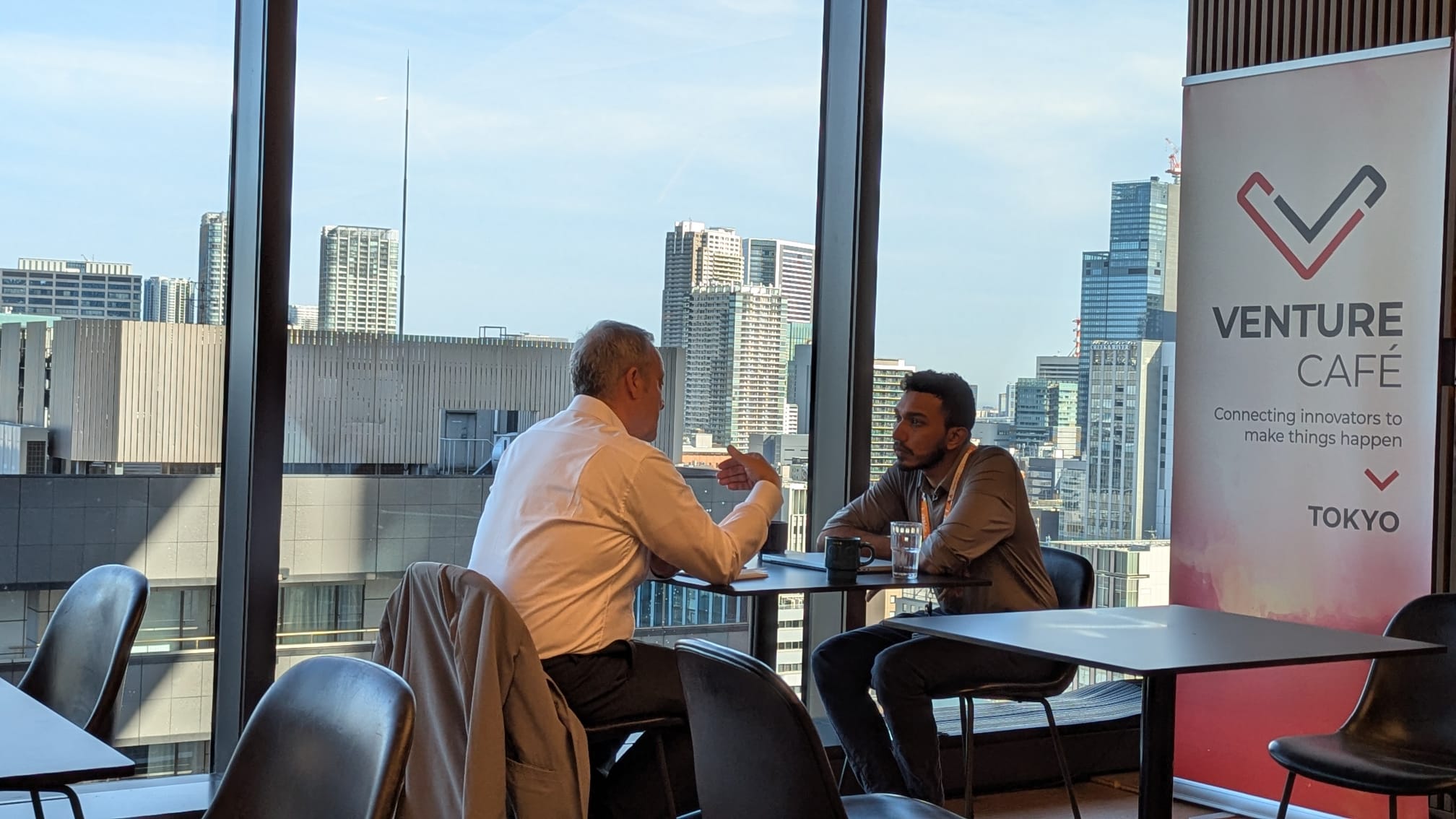
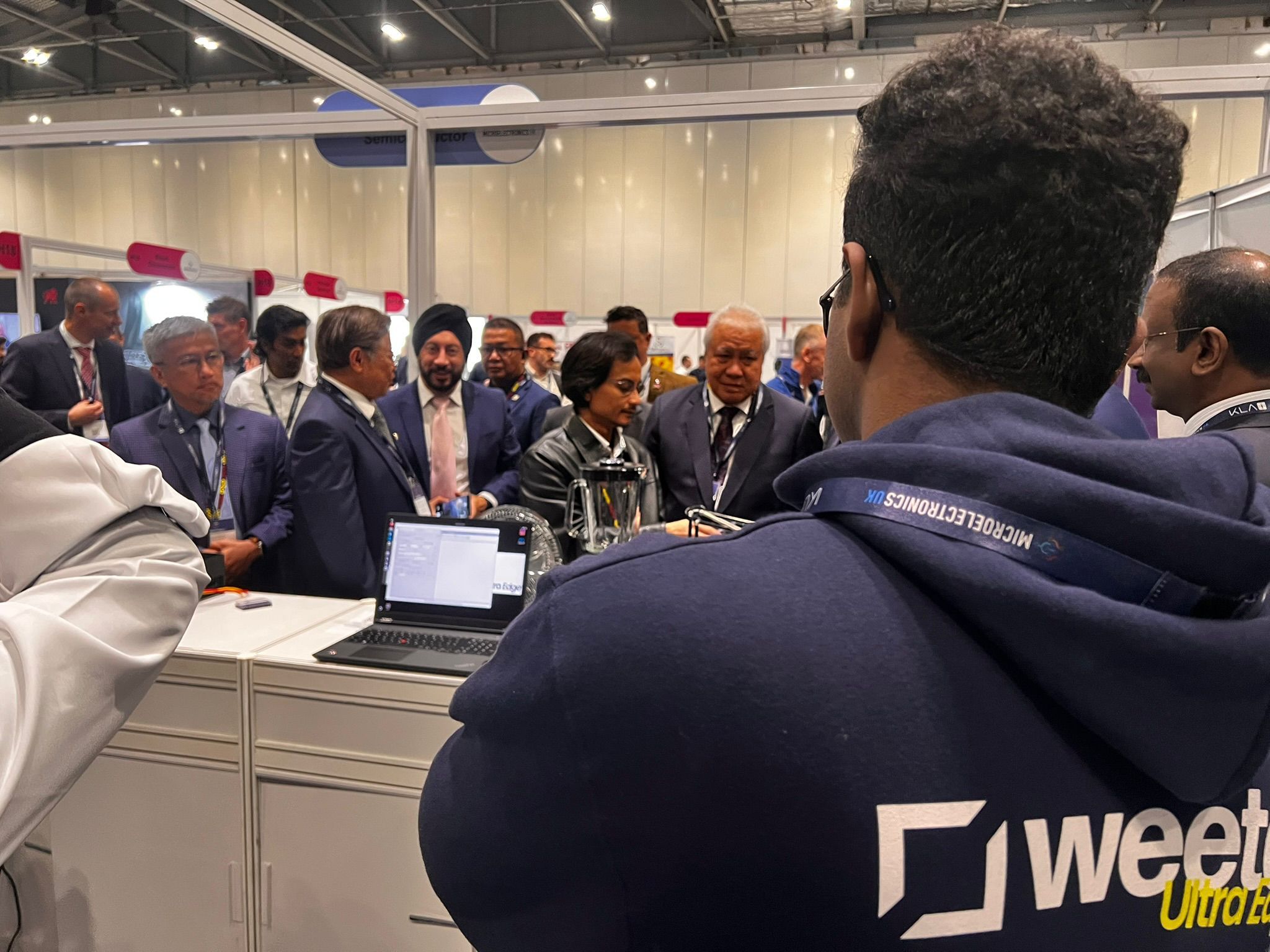
James went to Develop:Brighton last year, his first big games event outside Scotland, and saw the value of speaking with publishers and people who run large games businesses beyond the local scene. He returned this year, a couple of months before Gamescom, to meet publishers about funding and publishing support for the game, and conversations started there. A fellow cohort member who had previously run a games company described a rhythm across events: meet people at one and follow up at the next, with a deal sorted out online or at the next big event. Gamescom became the follow-up for the most enthusiastic leads from Develop, and it was also James's first time leaving the UK. He met the developers of the studio's biggest inspiration title there too.
He arrived with fewer meetings booked than he would have liked, and those he had were extremely high quality. Three publishers are in evaluation, two of them further along and one wanting a couple of tweaks before it may be ready to fund.
For a conference floor, James recommends:
- Setting meetings up ahead of time, while leaving part of the calendar open for late sign-ups.
- Sending your deck even when it does not feel ready, since a clear point made quickly and a good conversation can be worth more than full slides.
- Letting the conversation do the work: one publisher liked James enough to recommend a better-suited publisher and offer an introduction.
- Getting on with people and engaging with what they say.
Treat each event as the follow-up to the last one, and send your materials before you feel ready.
"It helped us secure ongoing publisher conversations, contract work, relationships with the global industry, and a sense of what’s actually happening in the industry we’re all members of." - James Rodgers, CEO, Fish Tin Games, on Gamescom
Weigh every opinion before deciding
James treats players as the people paying for the game, which makes them his boss, and he works at resisting the voice that says they did not understand what he was going for. He looks at his own reaction to feedback as if it were somebody else's, so he can judge it objectively, and data helps: ten players in a hundred raising the same thing is 10%, enough to investigate. He sees not taking feedback personally as a learnable skill, and one he has learned. Advice gets the same treatment. The residency's mentors each knew what to hone in on, and he found several voices more valuable than one, since conflicting views to debate gave him practice at weighing everybody's opinions and making his own decision.
Collect more than one opinion, then step outside your own reaction to it before you decide.
"We’ve built lasting relationships, crucial skills, and a sense of confidence that can be a struggle to gain alone." -James Rodgers, CEO, Fish Tin Games
Staying lean on purpose, and what comes next
The studio has four people today and wants to stay relatively lean so it can pivot with the market, a position that came out of a mistake. James does not want to grow for the sake of growth, and he points to what can happen when a lot of money arrives at once: an office follows, with a lease the company may not be able to pay over ten years, taken on for the optics of looking like a real company. Fish Tin Games avoided that this year and James calls the result massively successful. He wants the same mindset next year so the studio is still thriving.
The next milestone is a commercial launch in the fourth quarter of 2027. External funding would make life easier, because the studio could make a much bigger game with less stress. The studio is looking specifically for project funding, and it also offers work-for-hire services, led by audio support for other developers.
Match the size of the team to the work in front of you, and skip spending that exists for how the company looks.
Get involved
Techscaler supports startups across Scotland through education, community and international market access programmes designed to help founders build and scale ambitious businesses.
Click here to find out more about Techscaler and upcoming programmes.