

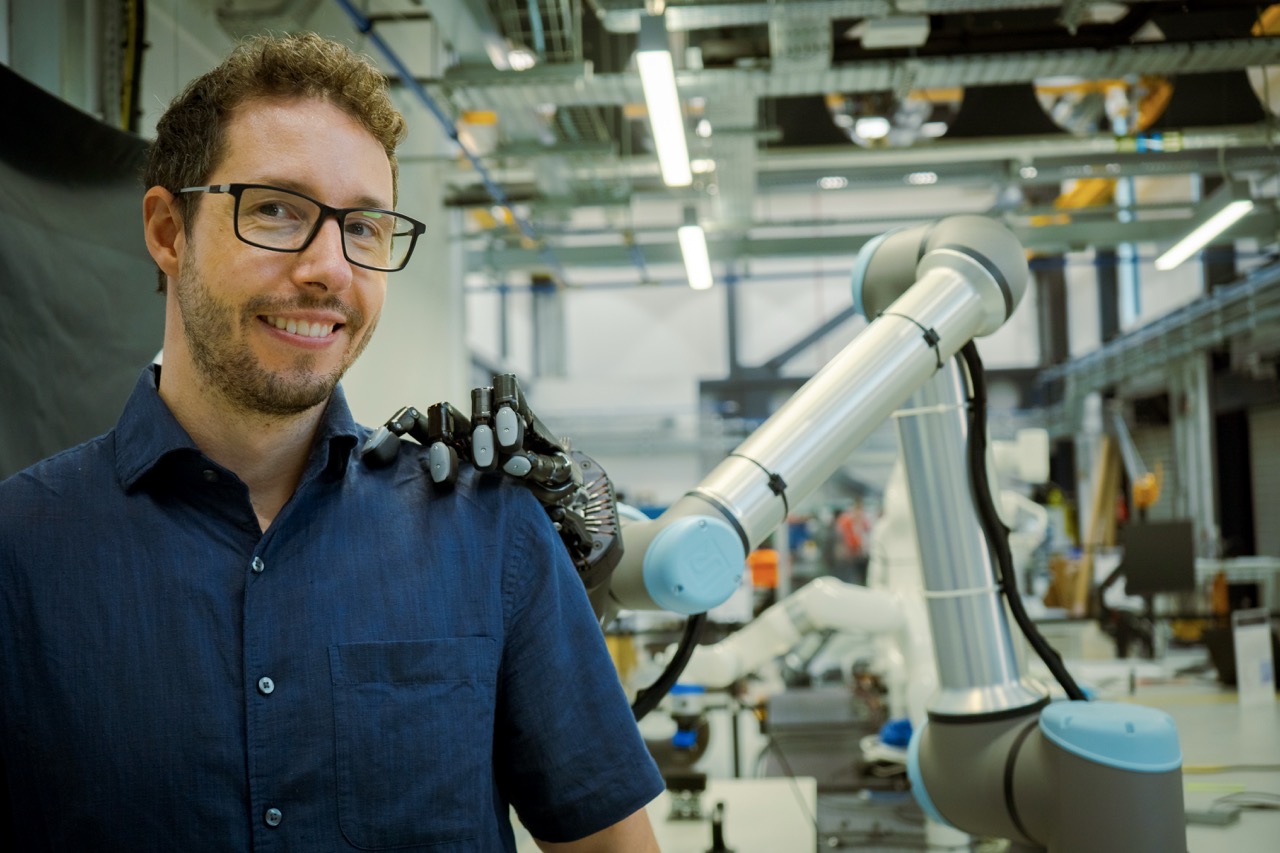

Skin is the largest organ in the human body, and it does more work than most people credit it for. It tells you when a glass is about to slip, when a grip is too tight, when the ground underfoot has changed. Robots have never had anything like it. They can see through cameras and hear through microphones, but the moment they need to handle something unpredictable, a wet dish, a patient's arm, a piece of machinery that has never been touched by a machine before, they are working blind. Zaki Hussein has spent the best part of a decade closing that gap, and the company he built to do it, Touchlab, has quietly become one of the more interesting deeptech stories to come out of Edinburgh.
Zaki's fascination with the underlying problem started early and stayed put. Growing up in Finland, he was drawn to nanotechnology and robotics at fourteen, then carried that interest through an Electronics Engineering with Nanotechnology degree at the University of York and into a role as lead developer on a VR stroke rehabilitation spinout, his first real brush with startup life. By the time he arrived at the University of Edinburgh for a government-funded PhD in electronic skin, competitively won after he pitched his own research direction, he already knew he wanted to build something that left the lab. He got there faster than most: Ocado became Touchlab's first customer before the PhD was even finished, using the company's e-skin to help warehouse robots pick fruit and vegetables without bruising them, and the business was profitable in its first year.
Robots can see and hear. They have never been able to feel.
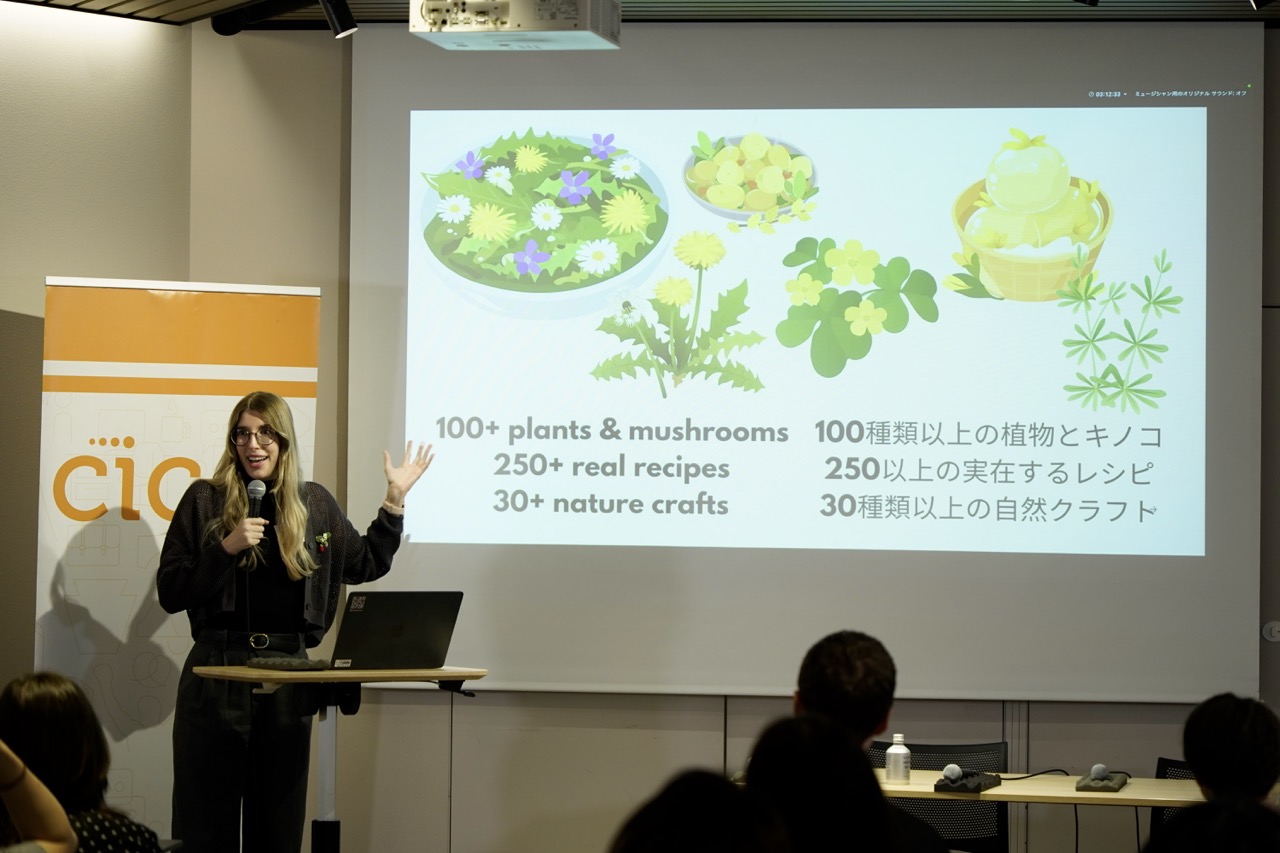
What Touchlab actually sells is a printed, skin-thin sensor that gives robotic hands and grippers something close to human-level tactile precision, paired with an AI layer that interprets what that pressure and direction actually mean. It is designed to retrofit onto hardware that already exists rather than demand a robot built around it from scratch, which matters enormously in an industry where most of the value is already sitting in fleets that companies have no intention of replacing. Depending on what a customer needs, that technology reaches the world in different shapes: raw sensors for organisations building their own hands and grippers, or a fully assembled telerobot system for the likes of healthcare and nuclear operators who need something ready to deploy rather than integrate from parts. This year the company launched TACTO, a mass-producible robot fingertip engineered to fit onto the vast majority of grippers in use worldwide, at ICRA in Vienna, where Zaki also gave a talk on physical AI and high-stakes dexterity.
The problem Touchlab is chasing is not an abstract one. A robot trying to load a dishwasher without shattering a wet glass runs into the same limitation as a robot trying to hand a patient a cup of water: neither can feel whether its grip is right until it has already gone wrong. Solve that, and you unlock robotics in the places it has struggled to reach so far, homes, hospitals, ageing populations that outnumber the clinicians available to care for them. It is a slower, harder route to market than a flashy demo, but it is a high-impact one Zaki has chosen to build the whole company around.
Hear from Zaki:
The discipline behind the dexterity
Ask Zaki what has been hardest about running Touchlab for eight years and the answer has surprisingly little to do with the sensors themselves. It has to do with people, structure, and the unglamorous mechanics of keeping a company aligned as it grows. His team is unusually specialised, built from PhDs across nanomaterials, robotic perception, and product design, and managing that kind of expertise, he says, is a bit like herding cats: everyone tends to believe their own field is the one that matters most, understandably, given how long they have spent inside it. His answer has been to keep the structure simple rather than clever. A small board. A short, repeated set of objectives that nobody in the company can claim not to have heard. And a hard rule against splitting control evenly between too few people, because a business with only two voices and equal weight between them is one disagreement away from stalling entirely.
"Never have 50-50 voting rights in a company, ever."— Zaki Hussein, Founder & CEO, Touchlab
That clarity, he has found, is what actually lets a technical team stay technical. When everyone knows where final decisions sit, people are freer to bring their expertise in full rather than hold it back to manage the mechanics of the room.
None of this, Zaki points out, is something he learned from a business school. It came from watching closely what happens when a company gets its early structural decisions wrong, and building Touchlab deliberately to avoid repeating them. Deeptech adds its own timeline pressure on top of all this. He and his early investors originally assumed Touchlab could scale within two or three years. It took conversations with people who had genuinely built hardware businesses before to understand that the honest average for a company like his is closer to seven years, and that founders need to be prepared to commit the better part of a decade before real impact shows up.
What it takes to be trusted in Tokyo
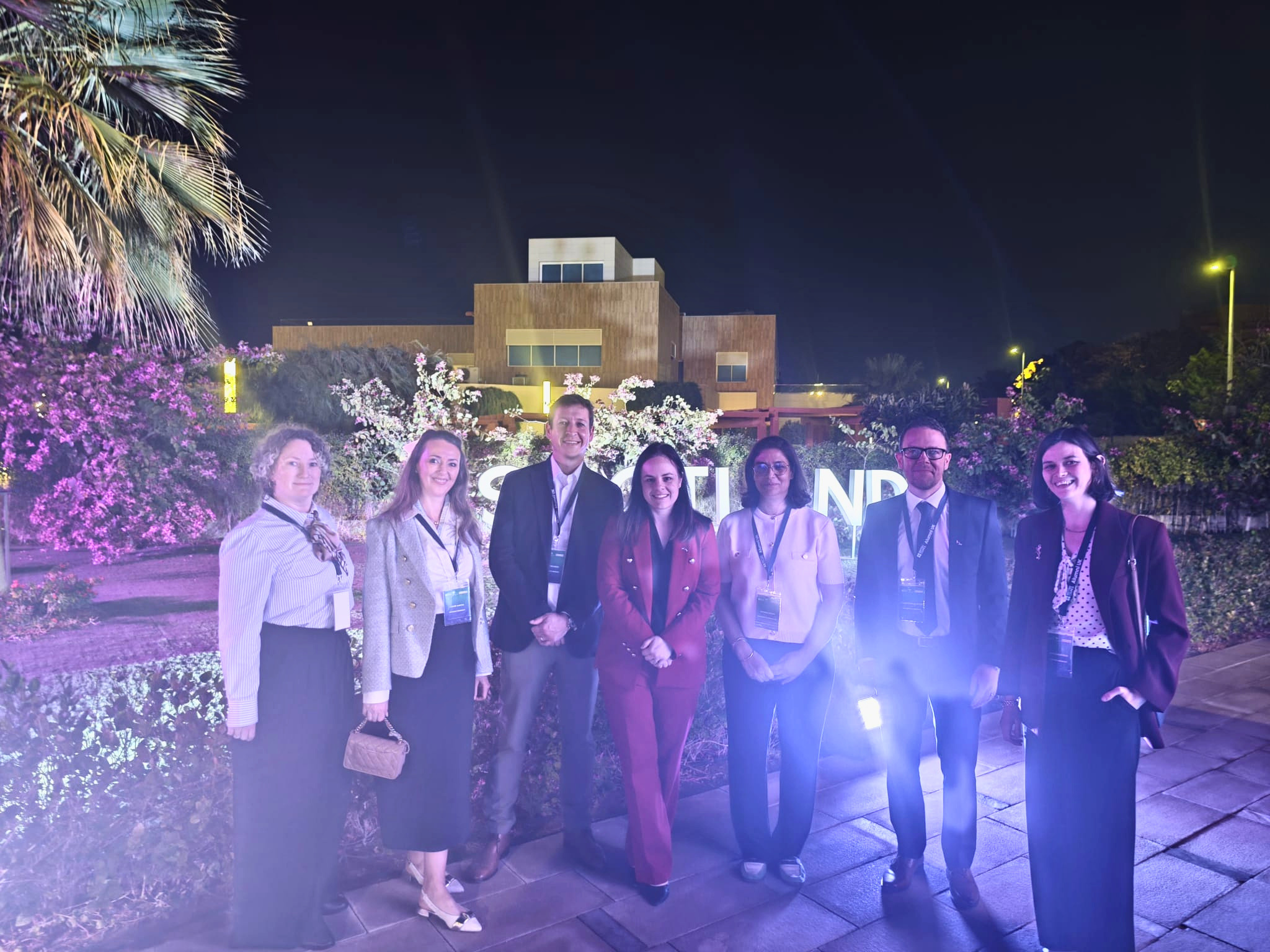
When Touchlab's commercial lead, Grant, travelled to Tokyo as part of Techscaler's international programme, he went in expecting a natural fit. Japan's robotics ecosystem is among the most advanced in the world, automation is embedded across its industrial base, and roughly one in four people there work in an industrial setting. What became clear almost immediately was that fit alone does not open doors in a market this sophisticated.
"The market is highly sophisticated; customers are thinking about reliability, integration and production readiness, not just impressive demos."— Grant, Commercial Lead, Touchlab
Preparation for the trip ran on two tracks simultaneously. One was cultural: understanding etiquette, hierarchy, and the sheer weight that a face-to-face meeting carries in Japanese business, where trust is built in person or not built at all. The other was commercial, narrowing down which stakeholders in a country that has been automating for decades longer than most actually had a live use case for tactile sensing, rather than a polite curiosity about it. On the ground, that preparation translated into fourteen pre-arranged meetings with corporate venture capital firms, system integrators, and Tier 1 corporations, along with a stage appearance at SushiTech that drew press attention for Touchlab's latest hardware release, and access to the UK Pavilion and UK Embassy through the company's existing relationship with Scottish Enterprise and Innovate UK.
"The Techscaler support was great because they connected us to high-level stakeholders in several industries in Japan, and we've been following up ever since."— Zaki Hussein, Founder & CEO, Touchlab
The immediate outcome was not a signed contract. It was the beginning of relationships, some of which have quietly been building for years, and a far sharper understanding of exactly where tactile sensing fits inside Japanese robotics. For a hardware company with long integration and validation cycles ahead of it, that is the real prize of a trip like this, even when it does not show up on a balance sheet the following quarter. A handful of the Japanese CVCs met on that trip have since come back into the picture, now looking at Touchlab's Series A round with genuine interest.
A second pair of eyes that owes you nothing
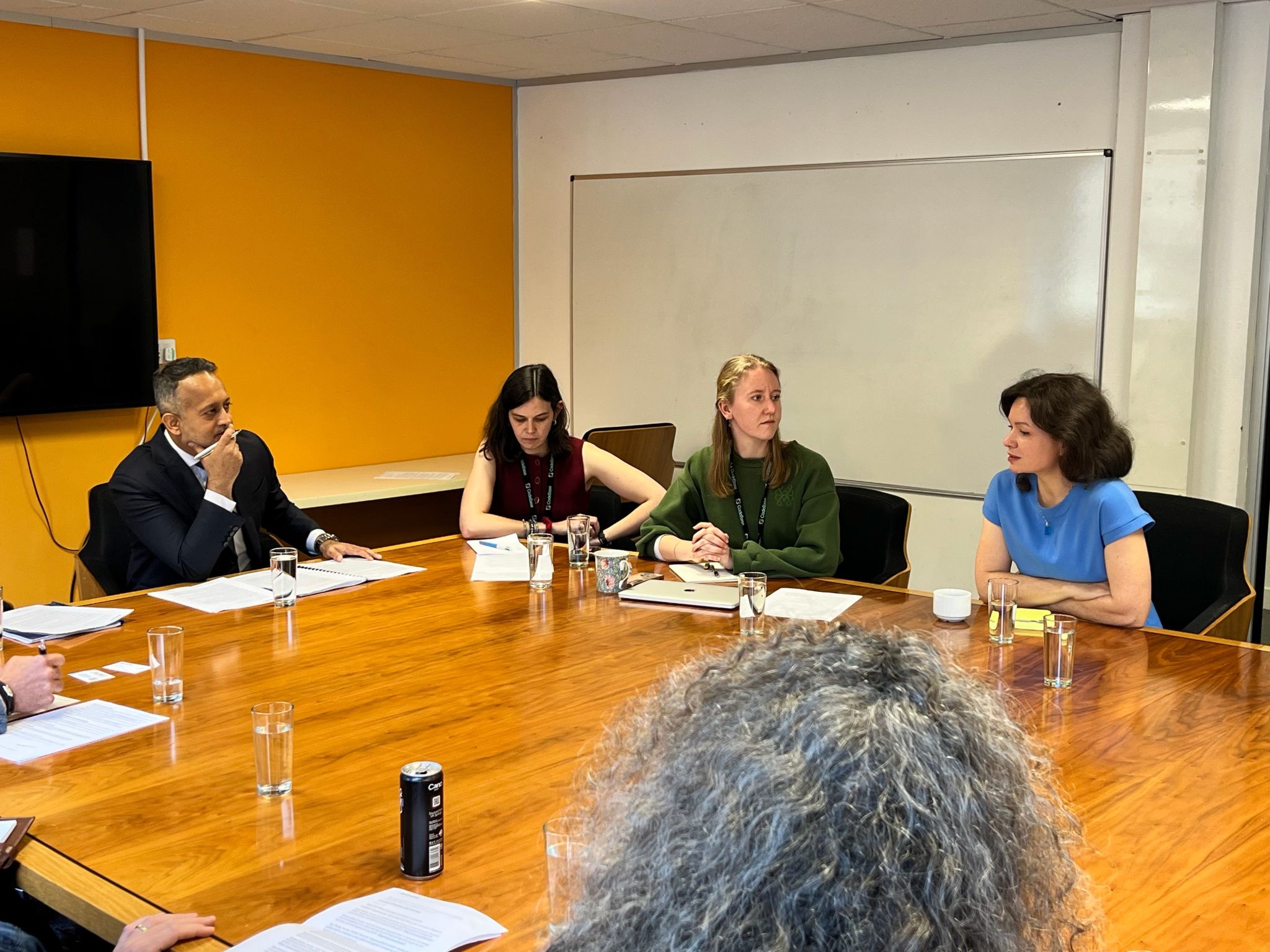
Alongside the international programme, Touchlab has an ongoing relationship with Allan Cannon, an Entrepreneur in Residence at CodeBase. Zaki describes the value of that relationship carefully: Allan is not someone who tells Touchlab what to do, but someone experienced enough to sense-check a decision and recognise a pattern that is genuinely difficult to see from inside the company day to day. The conversations tend to be practical discussions around covering commercial strategy and how Touchlab positions itself as it enters new markets, and Allan recently gave valuable input on a fundraising deck, bringing an outside read that did not depend on being embedded in the day-to-day detail of the business.
"The on-the-ground support from Ruth, Allan and the wider Techscaler team was extremely valuable. They helped create introductions and opportunities that would have been much harder to establish remotely."— Grant, Commercial Lead, Touchlab
For a first-time technical founder, Zaki thinks this closes a gap that is easy to underestimate from the inside. Engineers are trained, by instinct and by education, to treat the technical problem as the hard one. It rarely turns out to be.
"First-time founders, especially coming from a technical background, don't necessarily understand the commercial and the people challenges to scaling a technology. A lot of great technologies die because they don't reach the right markets."— Zaki Hussein, Founder & CEO, Touchlab
Building for the decade ahead
Touchlab is now roughly 23 people, preparing to raise a Series A to fund manufacturing at scale, with plans to close to double headcount over the next 18 to 24 months. Its client list already includes the likes of Sellafield in the nuclear sector, work that demands sensors durable enough to survive some of the harshest environments a piece of hardware can be asked to operate in. Its Välkky telerobot, piloted in a live stroke ward at Laakso Hospital in Helsinki, has continued through Forum Virium Helsinki as part of a wider European hospital innovation effort. Zaki also leads Touchlab's team in the ANA Avatar XPRIZE, a global teleoperated robotics competition that took the company through four years of increasingly difficult rounds to a top sixteen finish worldwide, and he now sits on XPRIZE's Brain Trust Council, helping design the next generation of moonshot competitions.
The ambition sitting behind all of it is easy to say and considerably harder to deliver: Zaki wants Touchlab's sensors on nearly every robot with a hand or a gripper, and its skin across the rest of the robot's body over time. Getting there will depend less on any single technical breakthrough than on the fundamentals he keeps returning to. Good governance. The right people in the right seats. Markets earned in person, one relationship at a time, rather than assumed from a distance. And enough patience to let a genuinely hard problem meet a world that is only just beginning to understand how badly it needs solving. Grant still points back to what that combination of access, context and credibility in Tokyo actually proved:
"It reinforced that you can start building an international presence without having to establish a full local operation from day one."— Grant, Commercial Lead, Touchlab
Follow Touchlab's progress on LinkedIn.
Get involved
Techscaler supports startups across Scotland through education, community and international market access programmes designed to help founders build and scale ambitious businesses.

.png)
.png)
.png)




.png)


