

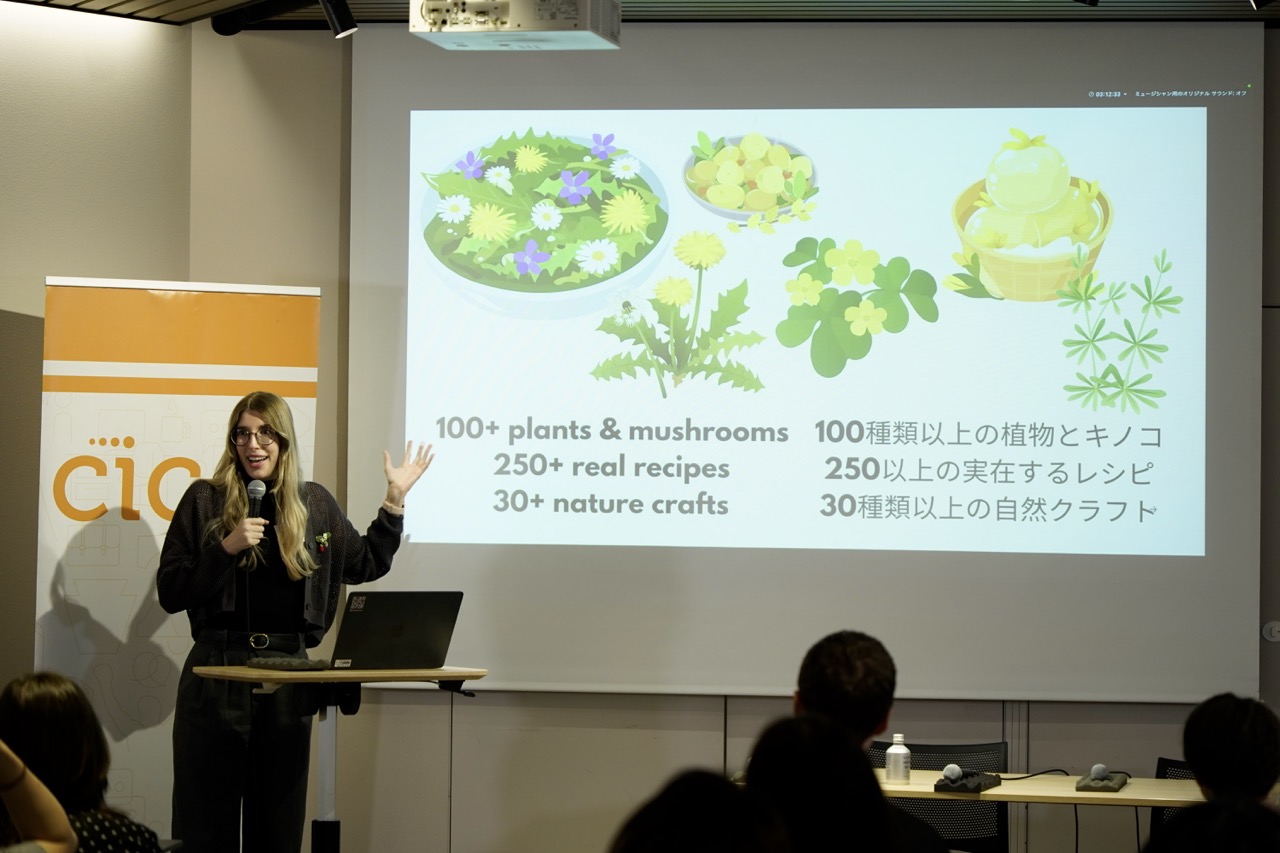

Elena Höge was sixteen when she realised gaming could hold real knowledge, not just invented worlds. She'd been playing the first Assassin's Creed, wandering Damascus, listening to characters speak in different languages, and something clicked. A few years later, playing the sequel while living in Italy, she found herself in a museum looking at Leonardo da Vinci's work because of a game. If real history and real language could sit inside something people played for fun, then maybe her two loves, learning and gaming, weren't separate paths at all. That single realisation set the direction for the next decade of her life.
It took her a long time to find the door into the industry. Back then most people who ended up in games arrived sideways, through unrelated careers and lucky introductions. So she built her own way in. Today Yaldi Games is a team of six split between Scotland and Germany, and their first title, the cozy nature exploration game Out and About, launched into early access at the end of last year after five years of development.
Five years, one idea, and a hobby that became the product
Yaldi's first game grew directly out of something Elena loves to do. In 2019, not long after finishing the Creative Bridge programme at CodeBase, she took up foraging. She still does it. That much loved hobby became the seed of Out and About, a game about plants, nature and the kind of quiet exploration that pulls people outdoors.
The build itself didn't go the way she expected. She thought eight months, maybe. It took three years to reach a Kickstarter, and after that campaign succeeded, the team more or less rebuilt the game from scratch, spending years just learning what good actually looked like. None of them had worked in games before, so every mistake had to be made and survived strategically and with resilience. Elena's take on how they got through it is straightforward: you can't sustain that kind of resilience unless you actually care about the subject. Foraging kept her going through five years of a project that kept getting harder before it got easier.
The team that carried it started small. Elena's sister handled character and plant art. A close friend of her sister's took environment and tech art. An early programmer rounded out the founding four, and all of them stayed through the entire build. The turning point came with a successful Kickstarter, backed by a grant that came through Techscaler in partnership with Scottish Enterprise, which guided Elena through the application process and helped her to create a strong entry. That funding let her bring on a designer and a second external programmer, both of whom helped shape and polish the game into something closer to what it needed to be. Having now lived through what it actually takes to sustain a five-year build, Elena's carrying that lesson into the next project deliberately: this time, she wants the whole team invested in the theme from day one, so the passion driving the work is mutually shared and enjoyed.
What it actually looks like to lead as a solo founder
Elena founded Yaldi without a co-founder, and she's candid about what that meant day to day. She was producer and creative director at once, the only person making every major call, testing every build, deciding every piece of content. There's speed in that. There's also nobody to catch you when you're wrong. She leaned on her mother in the early years, someone to talk things through when there was no one else to turn a problem over with, and family has stayed part of how she works through the harder calls as the business has grown.
Her current answer isn't to find a co-founder this late in the game. It's to build a team that doesn't need her in every decision. That means establishing a proper hierarchy, giving people ownership over the calls that sit inside their own expertise, and trusting the structure enough to step back from being the single point of contact for everything. It's a shift from carrying the whole business herself to designing a business that can carry itself.

Grants, mentors, and learning what she didn't know
Elena's first real contact with the wider ecosystem came through the Creative Bridge programme at CodeBase in late 2019, in a session that introduced her to grant funding as a genuine alternative to friends, family and early investment. She'd never come across it before. That one session gave her enough footing to found the company in January 2020, and grant funding has stayed part of how she's built the business ever since.
Techscaler's own grant process stood out to her against the alternatives. Some funding bodies offer nothing but a yes or no with no explanation either way. Others demand extensive documentation for a shot at written feedback. What she found through Techscaler was a genuinely collaborative process, someone helping her shape and understand an application rather than just judge it. For a solo founder without an industry background, that kind of mentoring access mattered well beyond the funding itself. Her broader view is that a well-connected mentor early on could have saved her years of learning quality standards the hard way.
The Techscaler one was very different in terms of grants because it was, well, I would say friendly. You basically had a chat with someone from Scottish Enterprise, and they would send you these kind of questions, and you just work through that document, and they would help you shape it, help you understand the application, help you create that application. And ultimately, when the application would have been put in, there was a high chance of success. I never actually encountered such a friendly way of drafting a grant application before. I would say very, very beginner friendly. - Elena Höge, Founder, Yaldi Games
What Japan taught her about the next chapter
Out and About is built around exploring nature, and Japan carries a kind of cultural reverence for the natural world that made it a fitting market to watch closely. It's also home to some of the most devoted cozy-game audiences anywhere, the kind of players who turn something like Animal Crossing into a cultural moment, and a large slice of Yaldi's largely US-based audience already treats a trip to Japan as a bucket-list kind of dream.
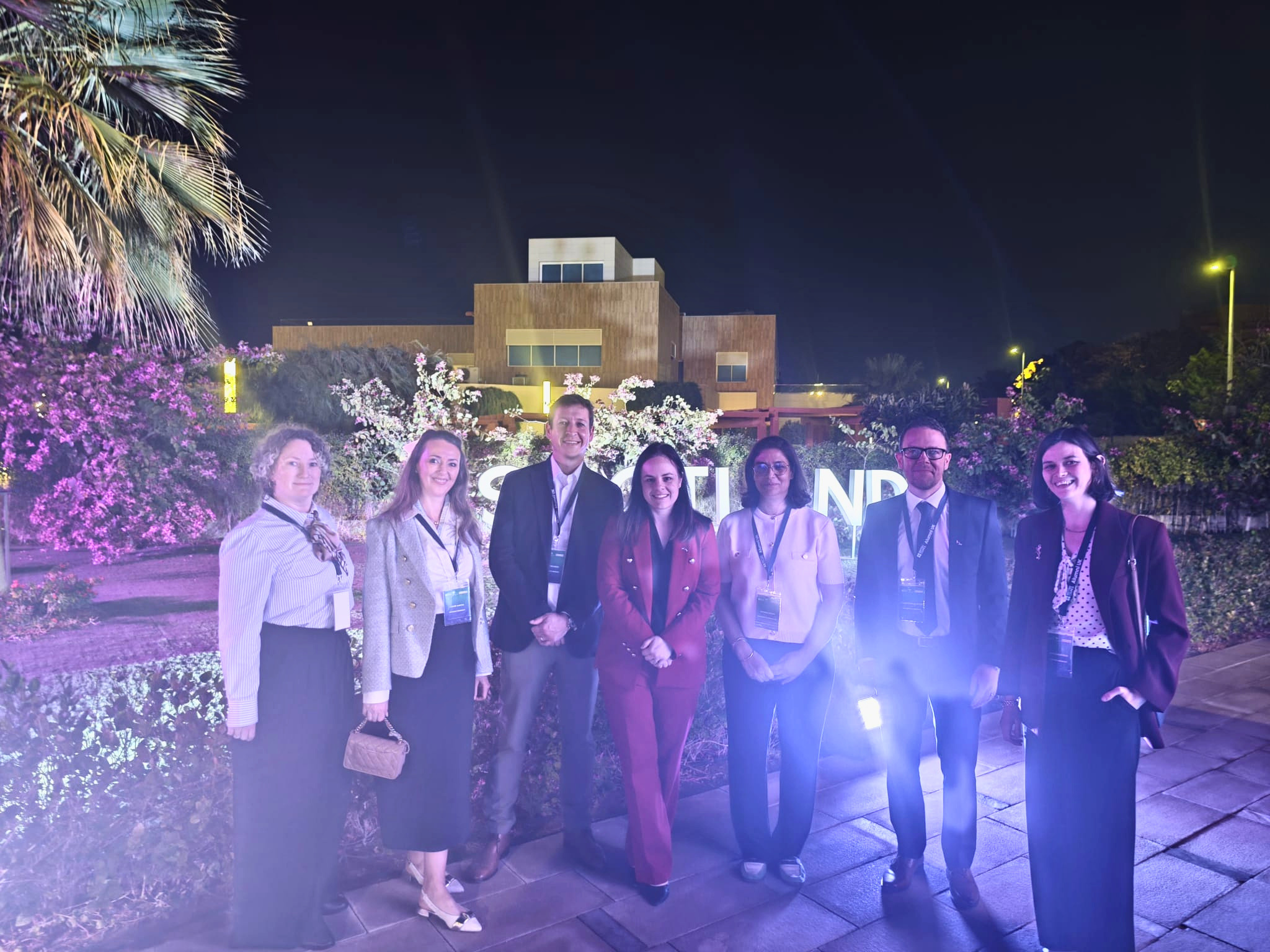
Techscaler's Japan programme, run in April 2025, took Elena to Tokyo to meet the local games ecosystem and represent Scotland at the Osaka Expo.
The trip reshaped how she thinks about a Japan-themed expansion. She noticed how much more the culture leans into cute, approachable design, mascots especially, and started thinking about how that aesthetic could shape a Japan expansion alongside Out and About's existing look and its own beloved Highland cow. Her art lead has since returned to Japan to gather reference photography for what that expansion might actually look like.
The bigger lesson was about pace. Japanese business relationships build slowly and in person, and the founders she spoke to described years of consistent, patient contact before anything closes. That reality played out directly for her in Tokyo, where she met the CEO of Q Games, a connection with real reach into companies like Nintendo and PlayStation. It's exactly the kind of relationship built for the long game, one she's approaching with the same patience the culture itself runs on, letting it develop naturally through the return trips and touchpoints still ahead rather than rushing it.
One of the great things that I learned during Techscaler's Japan visit was that I observed their local surroundings and actually saw a lot of the plants that we have in Out and About. Since then, my art lead went to Japan again and took a lot of photos, so we're building a reference of what this DLC could look like. - Elena Höge, Founder, Yaldi Games
Building a portfolio, not just a hit
Since the Japan programme, Yaldi's plans have sharpened considerably. Out and About's 1.0 launch is the immediate focus, the milestone expected to convert much of the game's existing wishlist into sales. Alongside it, the team is scoping a Japan-themed DLC shaped directly by what Elena saw and learned in Tokyo and Osaka. Elena is also part of Yaldi's delegation to the Tokyo Games Show, deepening the relationships the Japan programme opened up, Q Games among them, ahead of whatever those connections lead to down the line. The strategy underneath it all stays the one she's been building toward from the start: a sustainable portfolio, DLCs and future titles growing the studio outward rather than resting on one game alone.
Being a woman building in a male-dominated industry
Elena notes an imbalance in the C-suite layer of the industry, in boardrooms and investor meetings where women rarely hold the decision-making seats. Pitching a cozy, non-violent, learning-focused game into that room comes with its own translation problem. The appeal is real and the audience is there, but it sits outside the instincts most investors in that space have built up over years of backing a very different kind of game. Getting them to see the opportunity has meant doing more than most to land the narrative of the game.
The pattern shows up earlier too, in how founders pitch themselves before there's anything concrete to point to. Early-stage investment runs heavily on conviction and personal rapport, and Elena's watched male counterparts close that gap often largely due to confidence. It's an instinct she doesn't see female founders extend to themselves as readily, holding back until they're absolutely certain of all possible scenarios, a different kind of analysis paralysis. That difference can slow the early stretch down considerably, since the strength of the pitch often matters as much as the strength of the traction behind it.
Her read on where that evens out is a useful one for any founder still in the early stretch: once the numbers exist, wishlists, sales, real traction, the imbalance stops mattering nearly as much. The work, then, is building toward those numbers as fast as the game allows, and trusting that the proof will do the talking the room wasn't ready to do for itself.
What she'd tell a founder starting out
Elena's advice to anyone stepping into a saturated market like gaming starts before a single line of code gets written: find out if the thing you want to build already exists, and talk to the people you think would play it before you assume you know what they need. Roughly fourteen thousand games release every year. Standing out takes more than a good idea.
Beyond that, her advice is about pacing yourself for a genuinely long road. Passion for the subject matter isn't optional when a project takes five years to reach the market. And mentorship early, ideally from someone who's already made the mistakes you're about to make, is one of the few ways to shorten that road at all.
Honestly, I think any founder should have a network around them. You don't want to do it alone, even if you have a co-founder. So I would say anyone should join the ecosystem, go to the events that you're organising, apply for the programmes, because it's all about being there, meeting the other devs, other founders, learning from them, sharing resources, sharing network. No one can go at it alone, and that's the whole point of Techscaler: bringing people in and then helping the ecosystem scale through that. - Elena Höge, Founder, Yaldi Games
Get involved
Techscaler supports startups across Scotland through education, community and international market access programmes designed to help founders build and scale ambitious businesses. Click here to find out more about Techscaler and upcoming programmes.
.png)


.png)

.png)






.png)


