


After two decades building and running studios, most recently leading Tag Games through its sale to Scopely, Marc Williamson went looking for the games that shaped his career and found they were no longer available to play. Umbra Dynamics is his response: a Dundee studio reviving classic 80s and 90s IP for new audiences. It has already released collector's editions of well-known titles to a warm reception from fans, and publishers lining up to to the table.
Marc Williamson has been building games for 20 years. He was heavily involved in gaming studios, including Tag Games, where he stayed on as Head of Studio. When he left, it was to start something new in an industry he still cares deeply about. He was back at it the very next day, working out what to build next.
The answer turned out to be Umbra Dynamics, a studio that finds classic video game IP from the 80s and 90s and brings it back to life through remasters and reimaginings. The space it operates in was quite sparse at the time. Games as an industry has never looked after its own past the way film or publishing do, and the handful of companies that revive older titles are mostly owned by large corporations. Night Dive, a studio Marc admired for bringing historical games back to life within one genre, had been doing good business and was acquired by Atari. Independents doing this work were rare. To Marc, that looked like a strong untapped opportunity rather than a warning, and he built Umbra Dynamics to take it.
The games that went missing
The idea came from something Marc noticed after leaving his previous role. He went looking for some of the games he had built over the course of his career and found that they were no longer available anywhere, and when he tried to track down the classic titles he had grown up playing in his early teens, the result was the same. Around the same time he read an article claiming that 87% of video games are currently unplayable, which put a number on what he had been seeing for himself.
The way Marc frames the market need is to compare it with other media. If every film and book you loved from the 80s and 90s disappeared overnight, it would leave a cultural hole, and that is broadly what has been happening to games because the industry has not built the habit of preserving its own catalogue. The audiences for those titles still exist, and the IP still holds value, which is what makes it a commercial opportunity as well as a preservation one.
Having spent his whole career focused on whatever was coming next, Marc could see that the more interesting gap was behind him, and he decided that his next business would be built around closing it.
"If you can see the gap, you can see where the market is and you're not deluding yourself, right? You've got to have some sanity checks in there. Ignore the naysayers and go for it because you might just find that niche that no one else has even looked at." - Marc Williamson, Founder, Umbra Dynamics
Earning the right to the rights
The first job was getting licence holders to the table, and that took time. Marc was one person approaching companies about titles they had held for decades, and until he could show some track record there was little reason for them to engage. It took around six months of steady outreach before the first agreements landed, and once they did the work could properly begin.
What carried him through that period was a clear view of the demand rather than any need for others to confirm it. His logic was that a market gap other people couldn't see was a stronger position to be in, because it meant less competition for the ground he wanted. When rights holders said the space wasn't something they were focused on, he read it as confirmation that the opportunity was still open.
Two Gamescoms have since given him a useful before-and-after. He went to Cologne last year not long after setting the business up, at a point when publishers were holding back on commissioning and there was little capital moving through the industry. He attended Gamescom 2026 this August with Techscaler and observed that the mood had turned. He had a full diary of people wanting to talk about their catalogues, publishers were telling him directly that they had space on their slates and were commissioning now, and he's aware of three or four businesses that didn't exist twelve months ago now looking at the same territory. Both are signs the market is catching up with the read he made two years ago.
"So I knew that there's a need. I absolutely knew it in my core and the fact that other people couldn't see it was fine because that's a better opportunity for me, right?" - Marc Williamson, Founder, Umbra Dynamics
A founder by circumstance
Marc never set out to start companies. Twenty years ago he'd just left university in Middlesbrough, where the local games scene was heavily focused on racing titles. He didn't want to make racing games, and there weren't many studios doing anything else. He and his co-founder at the time David Hankin noticed that Nintendo had a new console coming, the DS, and that almost nobody in the north east of England was building for it because everyone had jumped onto Sony's PSP. So the two of them started making DS demos. When the DS launched in the UK and became a huge hit, they were effectively the only studio set up to build for it. The work followed, and the business grew from there.
Founding, in his words, was forced upon him by wanting to work on something he cared about in a place that offered no other route to it.
Going back to being a student
After leaving Scopely, Marc spent a couple of weeks working alone in a small office, speaking to no one. He describes it as a lonely experience. When he noticed Techscaler was running its Catalyst course nearby, he applied at the last minute.
There was a voice in his head asking what someone who had run and sold businesses could possibly learn from an education programme. He chose to override it. The value, as he saw it, wasn't in the curriculum. It was in sitting with other founders, listening, and deliberately not assuming he already knew the direction forward. Riffing off other people with the same mindset is, in his experience, the most powerful multiplier a business can have.
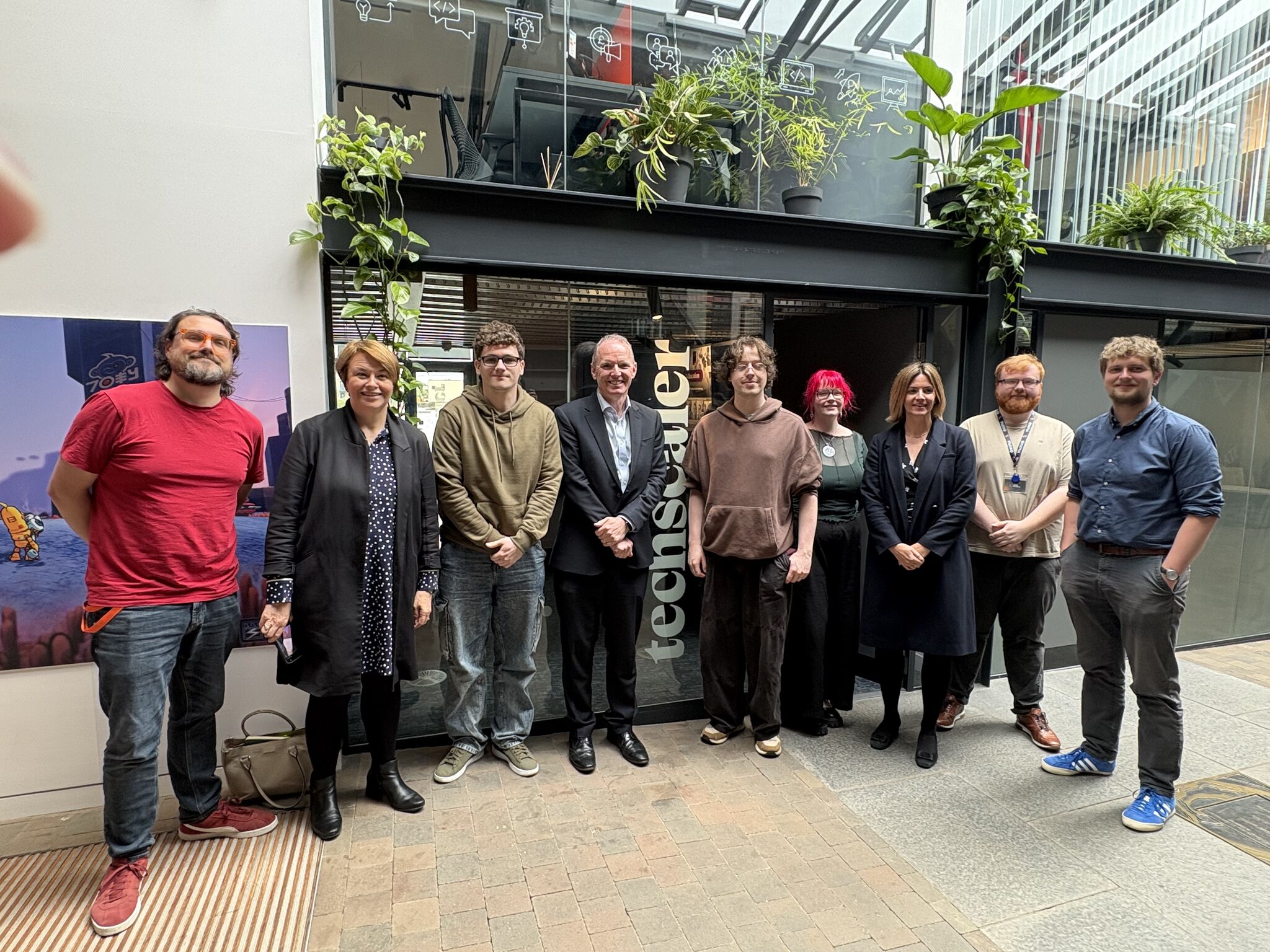
From Catalyst he moved into the six-month games residency at Techscaler's new Dundee hub at Water's Edge, which opened in March with five games studios as its first cohort. Before that, like most early-stage games companies, they had all been working remote. Marc went in expecting to meet new founders at the very beginning of their journey. What he found was a level of camaraderie and idea generation he says money can't buy, along with people he expects to remain friends and colleagues with for a long time.
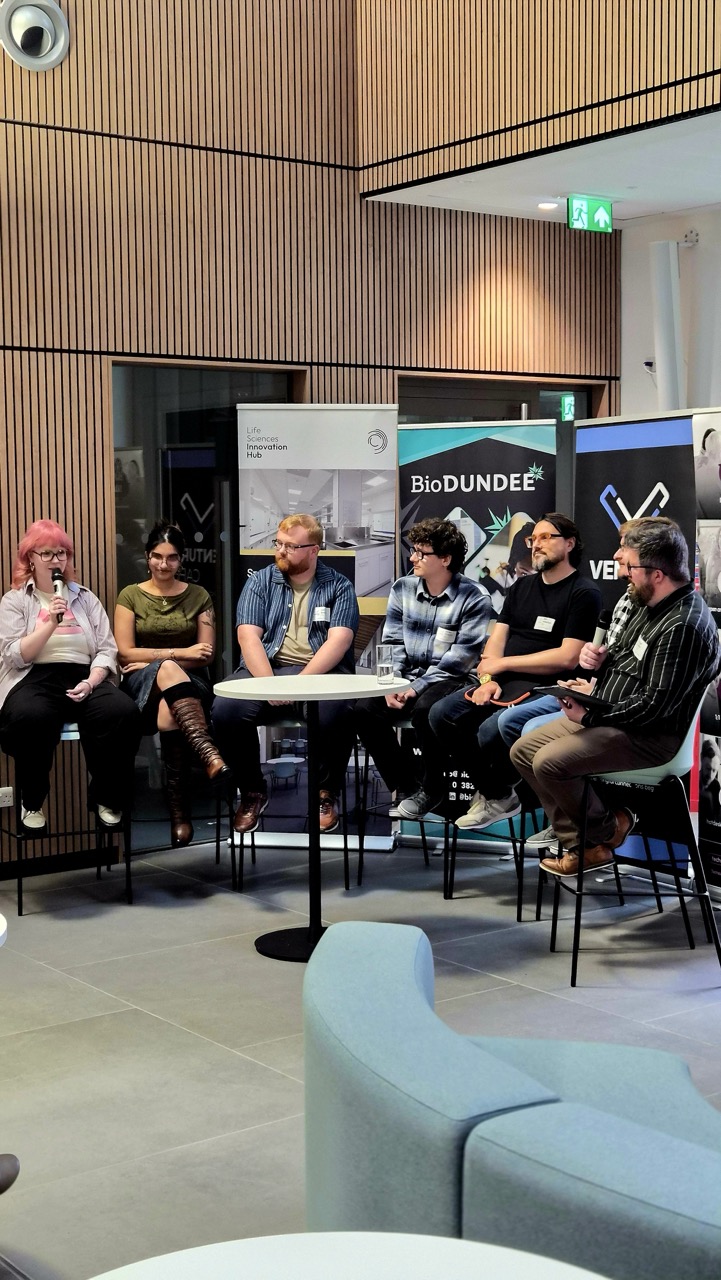
For a seasoned operator, the residency's speakers were largely a refresher. The daily proximity was the point: conversations around the coffee machine, overhearing someone's problem and knowing exactly who could solve it, or being overheard on a call with a publisher by someone who needed that contact. Speaking on a panel at Venture Café Dundee after the cohort returned from Cologne, he put it in terms of risk. Starting something new means rolling the dice, and the residency let him do that at low stakes, alongside people he could learn from. He came out of it with a network he knows he can rely on and a plan to move into a space of his own and expand the team.
The experience cut both ways. His fellow residents have been open about how much they leaned on someone with 20 years in the industry sitting a few desks away, and Marc is clear that giving back is part of the deal. The premise of Umbra Dynamics is itself about giving back to the ecosystem, and he's happy to sit down with a newer founder and go through a pitch deck or a financial plan he's seen hundreds of times before, if one conversation can steer them away from a hard lesson he's already learned.
"It's an opportunity to converse with other founders. And ultimately that's what I've always found is the most powerful thing of any business multiplier is having a space where you could converse with other people with that founder mindset, because they just spur you on and you riff off each other and ideas just spark." - Marc Williamson, Founder, Umbra Dynamics
The funding gap
Asked about the biggest hurdle facing Umbra Dynamics, Marc doesn't hesitate. It's the funding gap. Games take 18 to 24 months to build before anything can go to market, and the funding structures that support other industries through a long build largely don't exist here. A studio either funds a product itself or takes publisher money and potentially gives up IP as part of the deal. Debt finance is rare because there is no tangible asset to lend against, and IP financing remains, in his view, more talked about than proven.
Support also varies a lot by geography. Germany has a substantial fund for new games businesses and Malta offers significant tax incentives, and Marc reckons he could open a German office and have it more or less paid for over a year. He's chosen to stay in Scotland, where his family and life are, and where he thinks games punches well above its weight. Games is a global industry regardless. You sell to the world, and Umbra Dynamics is already eyeing hiring from across Europe.
Fill the calendar
Marc has been to enough Gamescoms to have a settled view on how to get the most out of a week in Cologne. He recognises the case for keeping things focused, where five well-chosen meetings over a week are worth more than dozens of average ones, and plenty of experienced founders swear by it. His own preference runs the other way.
His approach is to fill the calendar as completely as he can and accept that he'll be walking a lot. The reasoning is that it's very hard to judge an opportunity from a calendar invite. A conversation that looked marginal on paper can turn out to be the one that moves the business forward, and the only way to find that out is to take the meeting.
He also has some practical advice for the mechanics of a busy week. Keep a short version of your deck to hand that you can pull up in seconds. Carry physical business cards and don't rely on your phone alone to swap details, because connectivity tends to fail at the moment you meet the person you most wanted to speak to. Have a backup plan, and be at as many things as you possibly can.
"I will rather fill my calendar with 40 meetings and wear the hole in my shoes walking to each one. Because you never know what the opportunity is like with a conversation that you may have dismissed outright." - Marc Williamson, Founder, Umbra Dynamics
Reading the room, on stage and online
Marc's Scottish EDGE win came off the back of deliberate practice. Long before he applied, he'd been speaking about Umbra Dynamics at events, simply to get fluent in explaining the business to a room. When someone suggested he'd do well at EDGE, the pitch was largely there already.
A rough run-through at another event the day before the final gave him a chance to sharpen it. That evening he stripped the pitch down to its core points, rehearsed it until it stuck, and saved the bullets as a screenshot on his phone so he had a discreet prompt on the table if he needed one. The takeaway for other founders is less about the rescue and more about the approach: pitch often, keep the message tight, and build a fallback into your setup so a wobble on the day can't derail you.
The money is going where he thinks it counts. Around 90% of the Edge funding is being spent on hiring to finish the product in development, because games is a people business.
What twenty years of founding teaches you
Asked about the hardest decision of his career, Marc doesn't reach for a deal or a launch. It's reducing a team to keep a business alive. In a company built on people and run by leaders who care about them, accepting that the team has to get smaller is, in his view, the hardest thing a founder ever has to do, and it's a decision he wants newer founders to know is part of the job rather than a sign they've failed at it.
His broader advice to early-stage Scottish founders is about conviction with discipline. Prove the opportunity to your own satisfaction, keep sanity checks in place so you're not fooling yourself, and then don't let the doubters slow you down. The niche nobody else has looked at is often exactly where the value is.
On the industry itself, Marc is optimistic. The games sector has come through a difficult few years, and the change in tone between his two most recent Gamescoms was marked. In 2025 publishers were holding back; this year investors and publishers were actively deploying capital into new product and telling him they had room on their slates. His read is that the sector is on a slow but real rise, and that the businesses positioned now will be the ones that benefit as it gathers pace.
Where Umbra Dynamics goes from here
Umbra Dynamics is at the point where the numbers are being proven and publisher interest is real. The company has tooling Marc describes as showing almost magic-level benefits for the work, and it's building adjacent commercial products that help the business grow. Traction is building, and there are signed letters of intent in place across a number of things he's not yet able to detail publicly.
Within a year, he wants the studio's biggest product out and fans asking for the sequel, with work on that sequel already underway. He wants a merchandise store with items that push a few boundaries rather than playing it safe, a team in the high teens, and revenue stable enough to plan bigger bets.
Click here to follow Umbra Dynamics on LinkedIn.
Get involved
Techscaler supports startups across Scotland through education, community and international market access programmes designed to help founders build and scale ambitious businesses.
Click here to find out more about Techscaler and upcoming programmes.




.png)


.png)







.png)


