


Most of us have opened a parcel that's far too big for what's inside it. Olga Maksimova builds software for the regulation that's meant to put a price on that waste.
Under the EU's Packaging and Packaging Waste Regulation (PPWR), anyone supplying goods to the European market has to pay an eco-fee on the packaging waste they generate, and that holds whether the parcel ships from Edinburgh or from a manufacturer in China. Similar rules apply in Canada and some US states. Lappa takes on the hard part. From a photo of the packaging, it can work out whether a bottle is plastic or glass and help produce a label that meets the new rules. It then calculates the fee and handles the reporting, with integrations into the government authorities responsible for collecting those payments.
Olga moved to Edinburgh on a UK Global Talent visa with two decades in business development behind her and two companies already built, one of them a tax advisory firm she took to a successful exit. Lappa, which started life as the tax compliance platform Lovat, is her third.
When the market is ready and so are you
Lovat was still a tax compliance solution when it joined an accelerator programme, and by then it had a healthy base of users. It was those users who changed the direction of the company. Talking to them, Olga found they had a problem that hurt far more than tax: calculating and reporting eco-fees on their packaging. She could see a new market forming around it, and she moved the product towards it.
Then 12 August arrived. The PPWR labelling deadline landed a week before we spoke, and the weeks leading up to it were flat out. Hundreds of requests were coming in from large corporations without Lappa having to chase any of them. Olga has felt that once before in her career, and she's precise about what it means: for her, product-market fit is the moment the market and the product become ready at the same time, with very few others ready alongside you.
The tax years had taught her what the other side looks like. That market was already mature, and the competition included large American companies with deep pockets to spend on innovation. However hard Lappa worked on its product and its support, persuading clients to choose a smaller player was a constant struggle. In packaging compliance she hasn't yet seen a serious competitor.
One more piece clicked into place just in time. Lappa had recently achieved ISO 27001 certification, and Olga's read on enterprise buyers explains why that mattered so much. Large companies will onboard with a startup only when they're in time-sensitive need. When that moment comes, you need to already be compliant and secure.
"Product market fit for me it means when you are ready not just you have an idea and market is not ready yet but market is ready and you are ready at the same time and this is a match." - Olga Maksimova, Founder and CEO, Lappa
Back the idea at five percent
Two previous ventures taught Olga to listen. Founders tend to walk in believing they're the cleverest person in the room, and in her experience that's never the case. Her working rule now is to treat any new assumption as roughly five percent right. That's enough to put it in front of a client and see what happens, and it's nowhere near enough to justify pouring all her money and energy into it. After that she adapts, and keeps adapting, even if the business ends up turning 180 degrees from where it began.
She gets a reminder almost every day. Olga regularly passes a place in Edinburgh linked to Charles Darwin, and she holds closely to the line often attributed to him, that the ones who survive are the most adaptive. For a founder with limited resources, it's a practical discipline. Move quickly on an idea, keep your time and money in reserve, and you'll have adapted to the market by the time you understand it.
Choosing to lead in a smaller market
The move to Scotland was a deliberate choice. When Olga was weighing it up, hiring was an employees' market and good people were hard to find, and Scotland was somewhere she knew she could find talent. She was also drawn to the country's history of invention and the sense that so much of what surrounds us started here. London, by contrast, left her a bit taxed. Her view is that it's better to be the best in a thriving place s than the last in a crowded city.
Borrowing bravery
Arriving in a new country as a founder is lonely. She was on her own and genuinely scared that nobody here would need her. On her very first day she went looking for a community that could give her what she calls fresh air on a regular basis, because working only on your own project is a quick route to burnout.
In Techscaler she found a room full of founders who'd already taken the leap. Watching them gave her the validation to do the same, on the simple logic that if they could be that brave, so could she. Olga is open that this matters to her as a woman, too. In her experience women founders often carry a particular kind of fear, and seeing bravery in others helps her find her own.
Her favourite book is The Wizard of Oz. Where each character sets off in search of something they feel they're missing, whether that's courage or a heart, and Olga knows she tends to look outside herself for bravery. The community came first for her. Market research and meeting potential customers abroad followed that.
Pricing decides who you can sell to
Olga took several Reforge programmes through Techscaler, and the growth programme had the biggest impact. The guest speakers came from companies as large as Duolingo, and she went back to their sessions again and again, picking up ideas on how to adapt sales channels as a business evolves.
What made it useful was how precisely she could use it. Early on, pricing was the question she kept coming back to, and she didn't need to work through an entire course to answer it. She went straight to the pricing material, watched and read everything on it, and changed Lappa's pricing many times over. She's certain that work is why Lappa can onboard enterprise customers today. When you're targeting a specific audience, pricing is critical, and hers is now built for the audience she's after.
"Currently we onboard enterprise level customers, and this is because we have proper pricing for them. 100% because I learned this from the Techscaler programme." - Olga Maksimova, Founder and CEO, Lappa
The premium on American courage
Olga's first international mission with Techscaler was the Silicon Valley pilot in February 2024, where Lovat was among the Scottish companies working out of Techscaler's first San Francisco hub. The first thing she took from it concerned the gap between founders at home and founders in the US.
American founders, she noticed, are brave to a degree that can look almost crazy from here, and investors reward it. That explained something that had puzzled her for a while, which is why the same kind of company can be valued so differently in the US and in the UK. She recognises the difference in herself. Even with product-market fit right in front of her, her instinct is caution. An American founder would hire immediately and spend to grow, while Olga thinks about whether the demand will last and how long it takes to properly onboard new people.
At a US expansion dinner hosted by Techscaler, the conversation centred on valuations, and Olga made the case that sustainable growth gives her peace of mind and a steadier route to success. The expert leading the discussion, speaking from a legal perspective, added a point worth hearing for any Scottish founder with an eye on US capital: you don't need to relocate to raise it. What you do need is the ambition and boldness US investors expect.
The mission also put her in front of American clients, and Lappa onboarded several of them. Serving them from Scotland meant working across a large time difference, with the team only able to cover US mornings. About nine months later, once onboarding had run its course, Lappa brought on a part-time person on the ground to support those clients. Olga sees support as essential. She also expects packaging regulation to peak in the US roughly a year after Europe, which gives Lappa time to be even more ready when it does.
Other people's mistakes are easier to see
Travelling with a cohort of Scottish founders turned out to be one of the most valuable parts of the experience. Olga's reasoning is that you're blind to your own mistakes, and far less blind to anyone else's. Watch a founder at a similar stage make a small error and you start asking whether you're doing the same thing.
The real value, for her, is spending time with someone a couple of steps ahead, because you can see what's waiting for you next. The setting makes that possible. Away from family and the weekly shop, with the time difference cutting you off from home, she compares it to summer camp. You're together full time with nothing else to do, which is a very different thing from catching up briefly at an event once a month or once a quarter.
"It's very valuable to see someone who is a little bit ahead of you and you just can calculate what will wait for you on the next step or on the top steps ahead." - Olga Maksimova, Founder and CEO, Lappa
Boots on the ground in APAC
Singapore, which Olga joined with Techscaler's pilot cohort in October 2024, taught her something very different from the US. She'd half expected to sign APAC customers as easily as American ones. American clients had been perfectly comfortable working with a company at a Scottish address, as long as the price and the solution were right.
Small and medium-sized businesses in the region turned out to work differently. Olga ran trials and demos with a lot of them and found they're used to excellent customer support and won't consider a vendor without a local address and local people to help them, whether that's through a partner or a call centre. Enterprise buyers were more open. Walking the exhibition floors at SWITCH and BLOCK71, she was struck by how few brands she recognised. Of the US names she'd have expected, only Stripe had a visible presence.
Her conclusion was that to succeed in APAC, Lappa would need either boots on the ground or a focus on enterprise customers. The wider advice holds for any new market: talk to real customers before you spend money on advertising or promotion there. Even with ChatGPT, she says, you can't get a feel for a market from a distance.
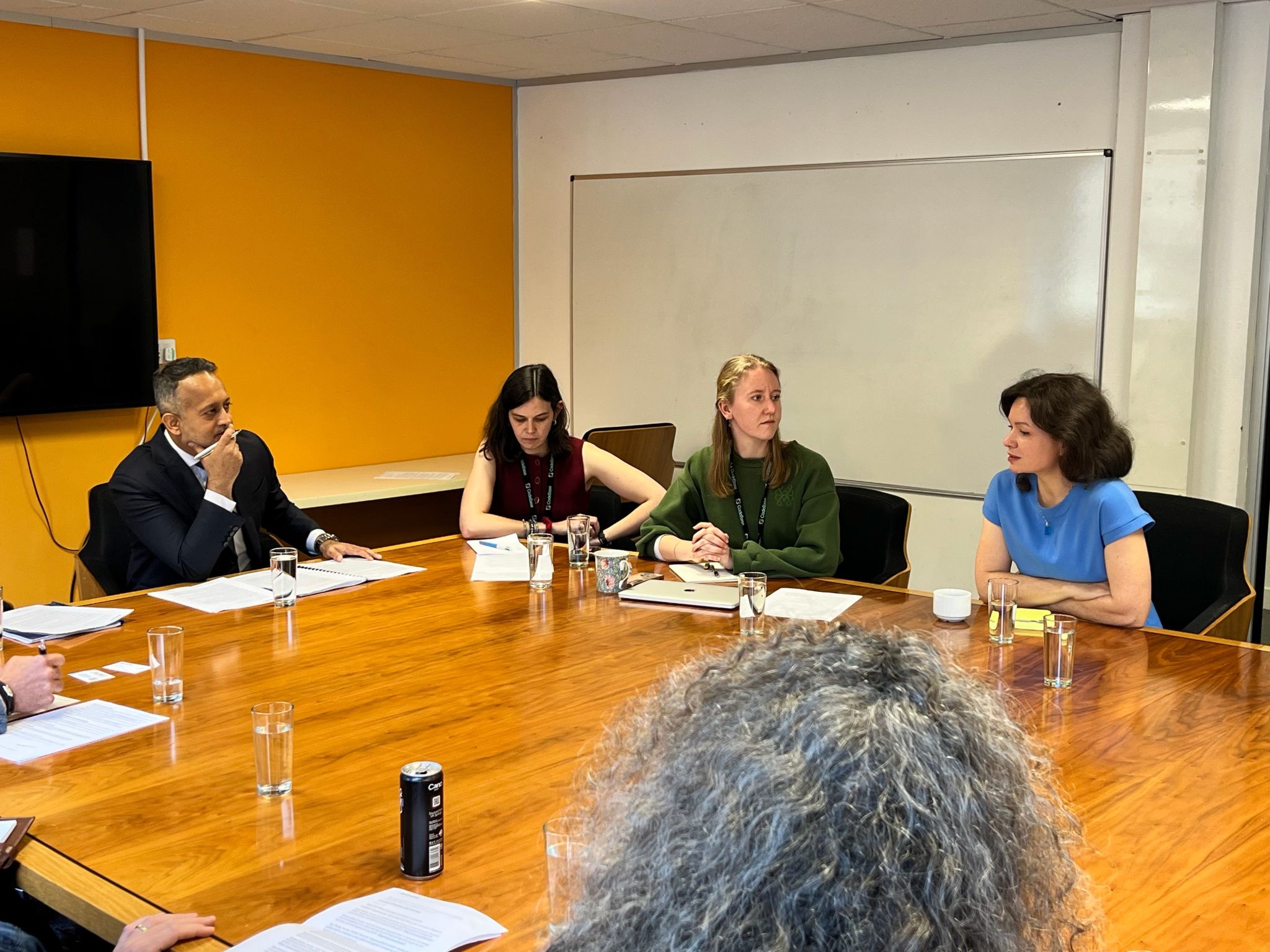
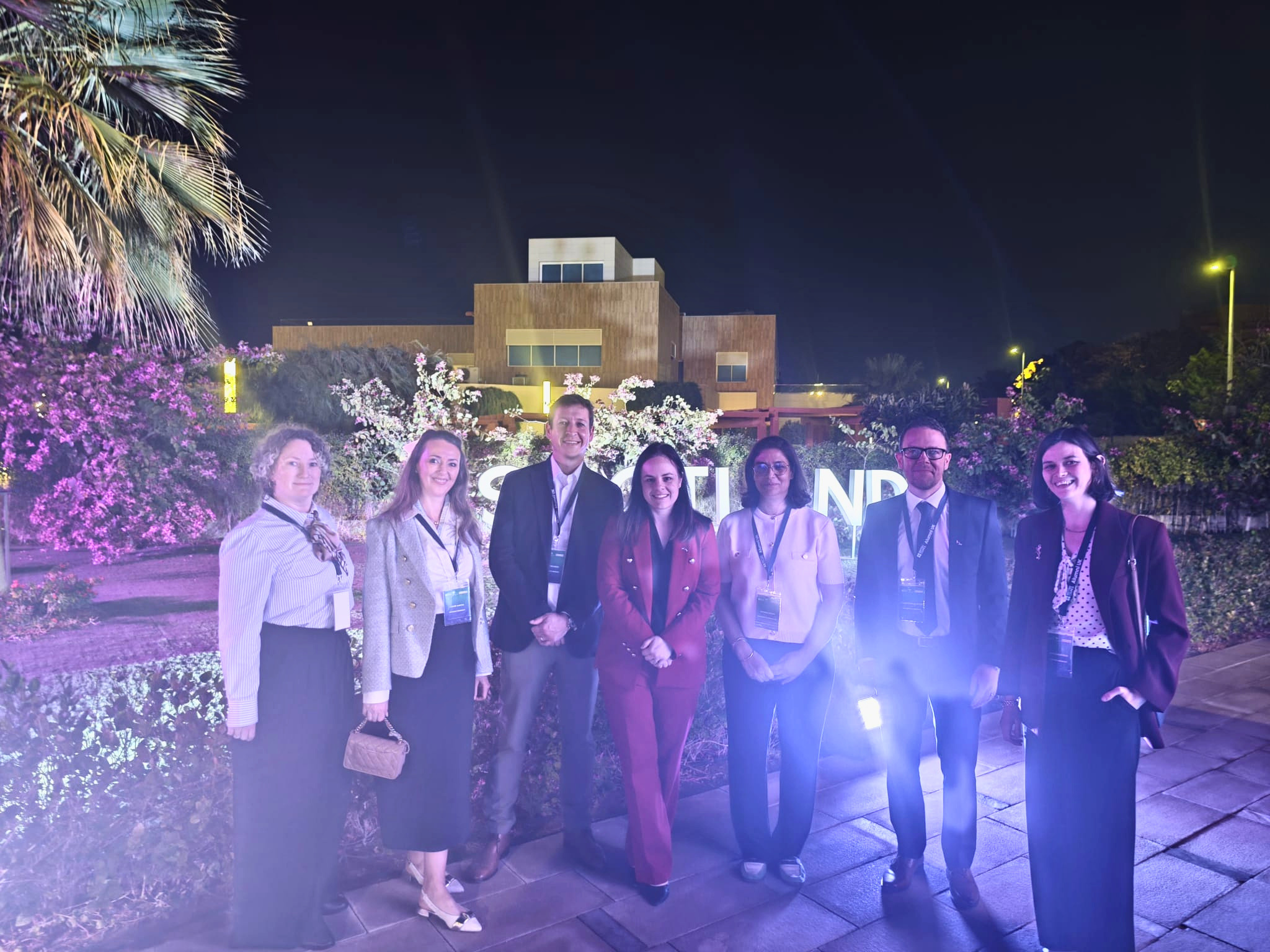
Lappa has since settled its route into the region. Speaking at a recent Techscaler roundtable at CodeBase with Nik Mehta, British High Commissioner to Singapore, Olga explained that the team considered setting up a company and hiring locally, and chose instead to work with a local partner on e-invoicing. Singapore is now a base for the wider Asia-Pacific region, where Lappa already serves clients across South Korea, Australia, New Zealand and China.
"If I would like to focus on this market either I need to get my boots on the ground or I need to focus on enterprise level." - Olga Maksimova, Founder and CEO, Lappa
Twelve months to number one
With PPWR now live, Olga's ambitions for the year ahead are big. Top of the list is making Lappa the number one provider of Extended Producer Responsibility (EPR) reporting worldwide. Alongside that, she expects to open a proper office in the US within the year, ready for the demand she sees arriving there next.
The product is moving too. Lappa already uses AI for document recognition, and within twelve months Olga wants it giving clients recommendations on which changes to their packaging would lower their eco-fees.
Asked what she'd say to a founder unsure about joining Techscaler, she talks about speed. Markets and technology are moving fast, and it helps to be around people who are watching the same changes and can ask you the smart questions that get you there faster.
Click here to follow Lappa's progress on LinkedIn.
Get involved
Techscaler, delivered by CodeBase on behalf of the Scottish Government, supports founders across Scotland from their first idea through to international scale.
Click here to find out more about Techscaler and upcoming programmes.

.png)
.png)
.png)




.png)


