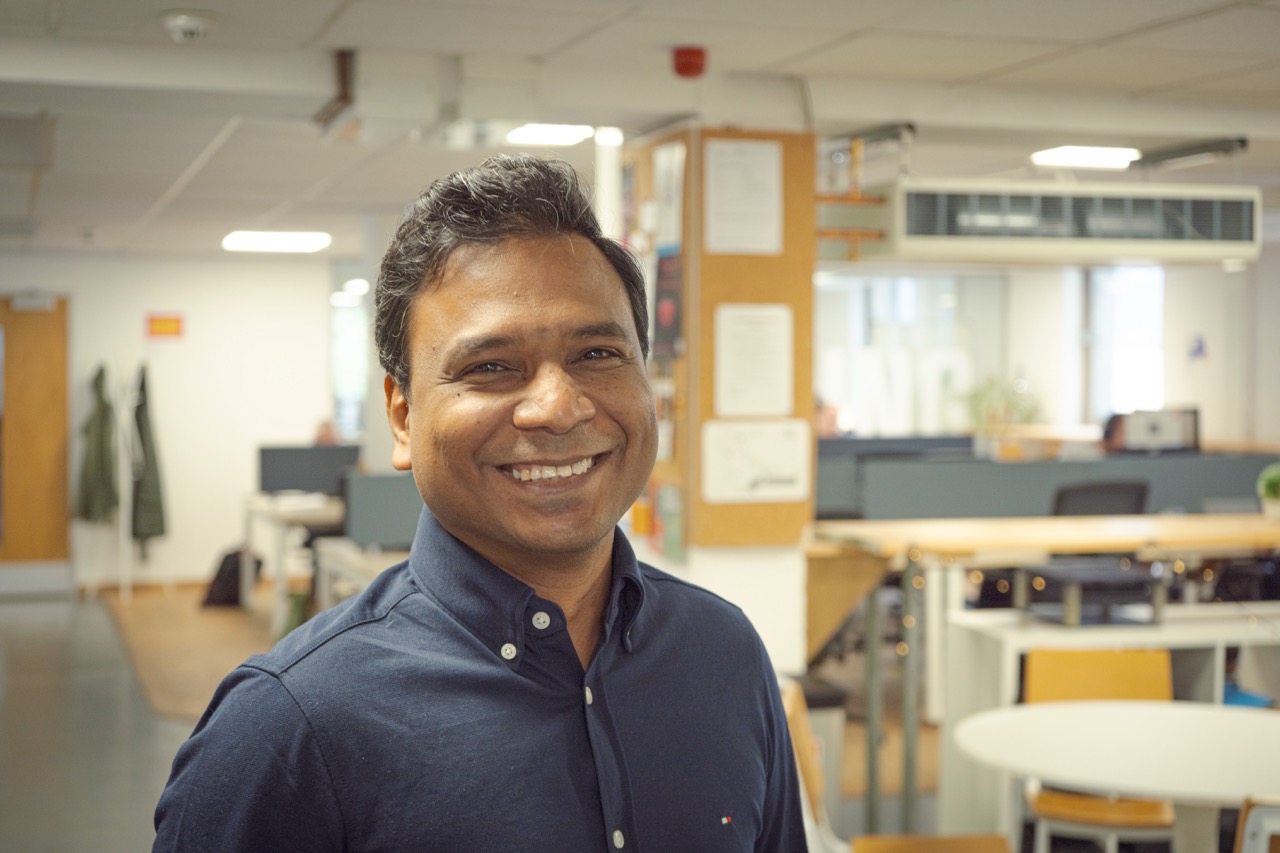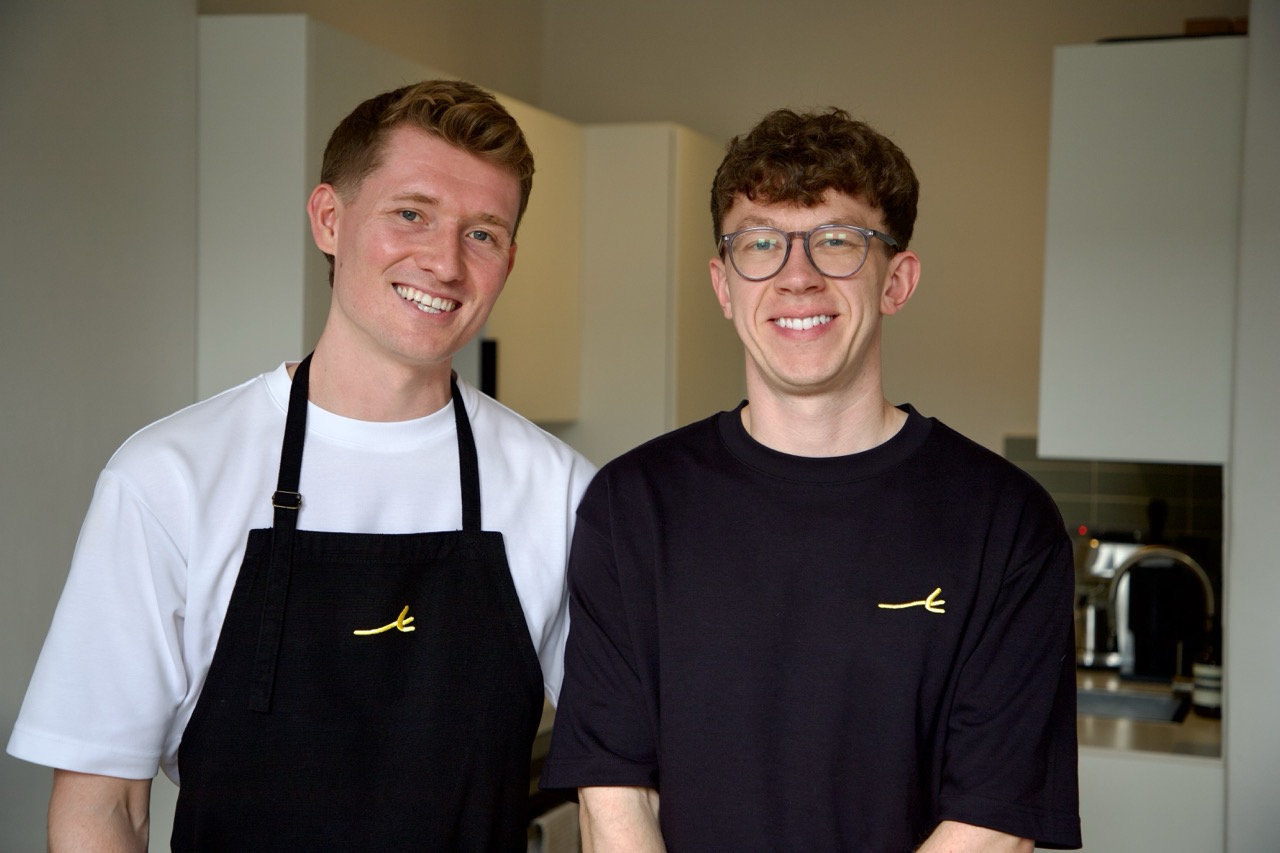

Jonny Kirkaldy built his career in product, first on the mobile app at Standard Life and then at the edtech company Estendio, where dense academic PDFs became formats that suit individual neurodivergent students. Both roles shaped Scran, the inclusive cooking app he now runs with his partner Grant Macgregor. Scran rewrites saved recipes into smaller steps, with prep at the start and ingredient amounts inside each step, and it launched on 6 August on iOS and Android.
Jonny works on Scran full time and leads user research and growth, while Grant leads design and engineering alongside a day job. Scran is a bootstrapped business made in Scotland.
Check the assumptions you carry with you
Scran began as a side project for Grant, who wanted to build his backend engineering skills while solving a shared problem: cookbooks across the shelves and an Instagram folder of around a thousand saved recipes that Jonny never went back to.
Jonny had seen what neurodivergent students faced with academic reading at Estendio and assumed much of it would carry over to cooking. He treated that as an assumption, since cooking is a different discipline, and used Techscaler Discovery and then Techscaler Catalyst to speak with neurodivergent cooks, mostly through qualitative research alongside desk research. The findings moved the product from recipe storage to simplifying the recipe, with smaller steps that lighten the load on working memory and make a task easier to start.
Experience from a related field gives you a place to start, and the people you are building for tell you whether it holds.
"I think it really helped us focus in that problem space for longer than what we potentially could have if we didn't have Catalyst." - Jonny Kirkaldy, Co-Founder, Scran
Pick the date, then decide what ships
Scran ran a four-month beta with 200 cooks, mainly in the UK with some in the US, drawn from a waitlist of 500 built through social media accounts opened in December. Until then only the founders had used the product. Activation looked good and week-four retention was 30%, which Jonny describes as strong in the consumer space.
Beta feedback had produced three larger features. Working to a launch date, the team delivered two and left personalisation for soon after, since the product would keep developing. The question they needed answered most was whether the business model would work, and Scran is a straight subscription with no free version or premium layer, so that answer had to come before more features were built.
With a subscription model, the launch is the test, so the feature list can follow it.
Reaching people without a marketing background
Neither founder has a marketing background, so Jonny took marketing on and learned as he went. Public relations was the main growth channel at launch. The press release led to features in five outlets in the first month, among them Edinburgh Live, The Herald, IT Brief and the autumn magazine of Autism Eye, which Jonny values in particular because it sits in the neurodiversity channel. Creators in the neurodivergent community also described their own experience of cooking and presented Scran as a solution, and that content did well.
The organic push took Scran to the Edinburgh Fringe. Two friends wore full yellow unitards with a cardboard app logo across the middle and were marched through the city, billing Scran as the Fringe's only downloadable show. A brand awareness activity to get people talking.
Let feedback keep coming after launch
The beta showed that simplification worked for most people and that how a person wants information presented varies. An autistic cook, for example, may want 'cook until brown' to read 'cook until brown, which is about 5 to 6 minutes'. That personalisation is the third feature, planned for the next few months.
It also showed that cooks who struggle with recipes often struggle to get to the cooking, which led to the shopping list: a recipe goes straight in and sorts by aisle, and items already in the cupboard can be unticked so tomato puree is not bought four times over.
The thumbs up or down under each simplified recipe came from the beta and stayed in production, alongside monthly surveys and follow-up conversations. As a bootstrapped business, Scran pays for that time with access to the app, such as another year free.
For a bootstrapped team, access to the product costs little to give and carries real value for the user.
"It means that at any point someone can leave feedback in the moment because it's so difficult to then remember exactly what you wanted from something if you're asked a month later or whenever that time comes." - Jonny Kirkaldy, Co-Founder, Scran
Give the partnership its own rules
Jonny and Grant are co-founders and life partners, and Jonny is candid that Scran still reaches the dinner table, since he often tests recipes while they talk about it. Their boundaries began with no Scran talk after 10pm, which leaves an hour to switch off together, and no big company decisions in the evening after Grant's day job. Low points come with the founder journey and can make it tempting to reinvent everything, and a decision benefits from time and space first.
On the shopping list, Jonny did the user research and prioritisation, then walked Grant through it. They reprioritised in a workshop and sketched their own visual ideas separately, which brought differences out before design began. Once Grant is designing, Jonny's later suggestions count as stakeholder feedback to be tested with users.
The rules moved with the business. July ran late, and Jonny was up until 2am the day before launch on press releases, so they planned a full day off together a couple of weeks after. His lesson is to build rest in where it is needed, and he sees a life partner as well placed to help because you see the effect of the work on the person.
Agree on the boundaries early, and expect to revisit them as the business moves through its stages.
Choose where your hours go
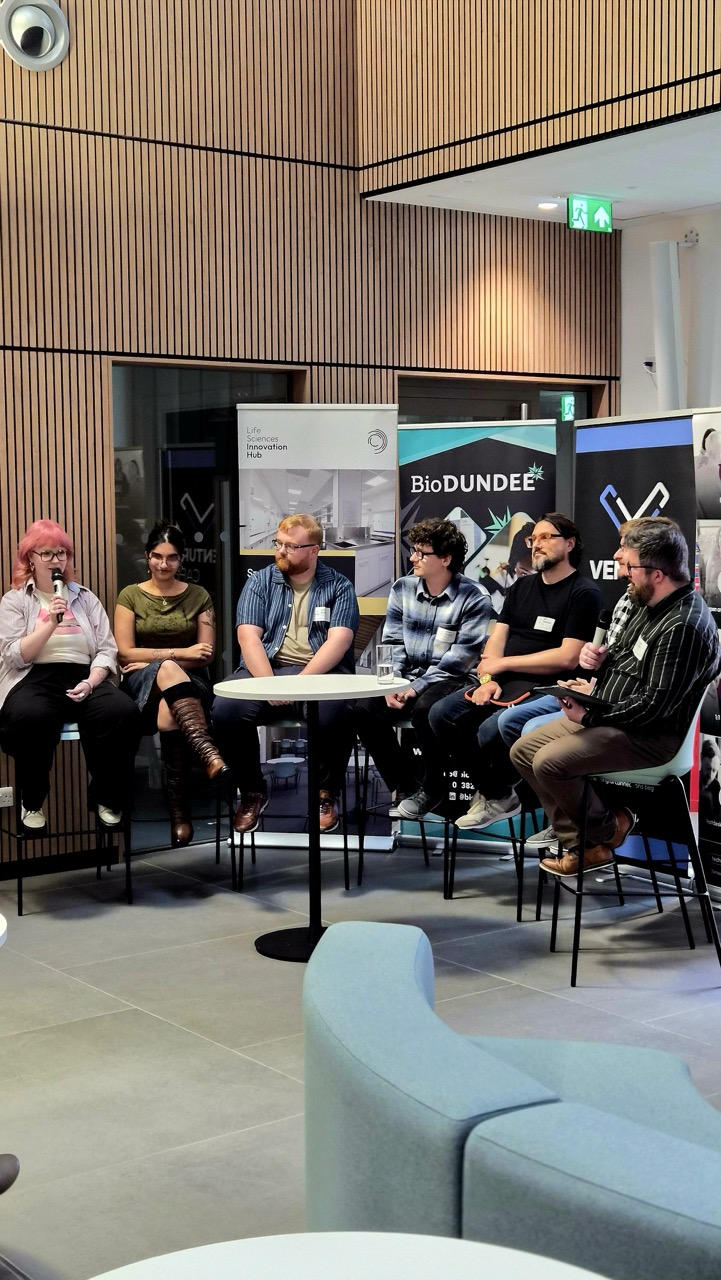
Kerry Shaw, then a fractional CTO at Estendio, pointed Jonny to Techscaler, first the Discovery course and then Catalyst. He wanted a structured programme that covered each part of running a business. At Catalyst, the jobs-to-be-done framework and customer interviews pushed him toward a smaller audience than he had expected, and he came away clear that Scran had to own a message, since no one else was focused on accessibility in cooking through technology. He attended every session in person to speak with founders slightly ahead of him, and built a lasting relationship with Rob, who was on the programme at the time and has since grown a consumer app. Jonny's advice to anyone joining is to stay curious and ask when something is unclear.
Preparing for Young EDGE takes real time on a small team, so Jonny weighed it before committing. A meetup at Haymarket introduced him to the competition, and a bootstrapped founder named David, who had won the Wildcard prize, corrected his assumption that Scottish EDGE was for established firms and talked him through how much time the process involved and what to watch for. A mentor who had entered earlier gave a second view. Jonny decided it was worth the hours, and about half of them went on building financial projections and working through likely outcomes, the area where he felt least prepared and work the business needed anyway. Scran reached the Young EDGE final and came away with a good amount of feedback, though it did not take the prize.
Before giving a competition your hours, speak to founders who have entered it and look for preparation that also serves the business.
"Just stay curious and yeah, be okay with that uncertainty and not knowing because you'll get answers and you'll learn through the process." - Jonny Kirkaldy, Co-Founder, Scran
What comes next
Personalisation is the next build. Jonny says the different marketing channels have proved effective, and his ambition is for Grant to join Scran full time so the business starts that way and grows. He also wants a bigger voice in the brand space, encouraging more people to think about accessibility in cooking.
To a founder deciding whether to make the leap, Jonny says that if it does not work out that is absolutely fine, because success to him means having made an impact on his own life and on other people's lives.
Click here to follow Scran's progress on LinkedIn, or download the app.
Get involved
Techscaler supports startups across Scotland through education, community and international market access programmes designed to help founders build and scale ambitious businesses.
Click here to find out more about Techscaler and upcoming programmes.