

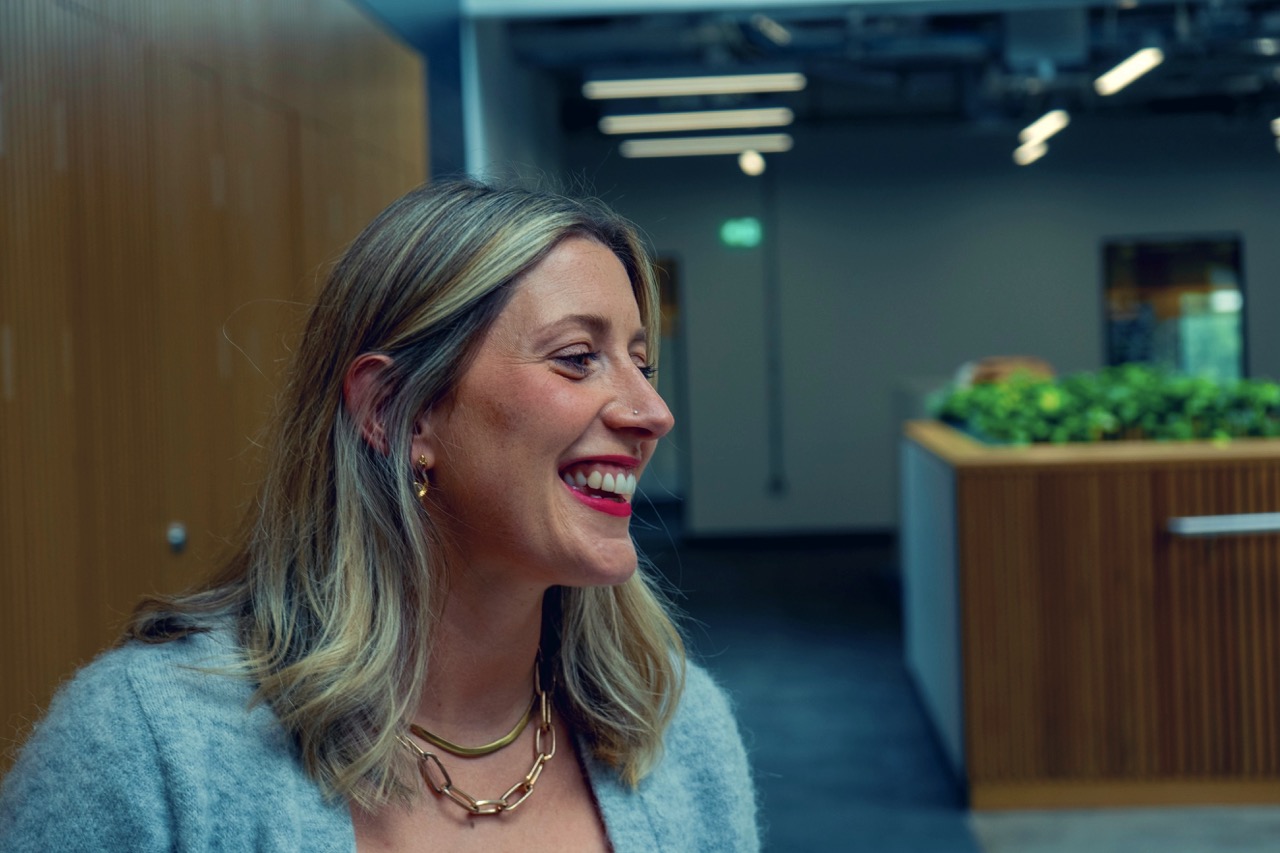

Five months after Techscaler first profiled Neon Guard, Chelsea Jarvie has a new pitch, a growing team and a second Silicon Valley trip ahead of her. The technology hasn't changed. The story around it has.
Most of what a deep tech founder does in the first year after leaving research isn't building the product. It's working out what the product is for. Chelsea Jarvie came out of a five-year PhD at the University of Strathclyde with a working way to tell adults from children online without collecting a face, an ID or any personal data. That research became Neon Guard, and when Techscaler first told her story in April, she was a solo founder carrying the technical build, the fundraise and the search for a founding team at once, with an MVP pencilled in for the back half of 2026.
The company she runs today sits on the same research. What's changed is the question it answers. Most age assurance asks for a face or an ID at the door, waves someone through and never looks again, which leaves a platform with no idea whether the adult who passed the check is still the person holding the device an hour later. Neon Guard is built to keep asking that question quietly in the background, so that a child on a shared account doesn't inherit an adult's experience. Getting from the research to that framing has taken a rough trip to California, a rebuilt story and a lot of decisions made alone.
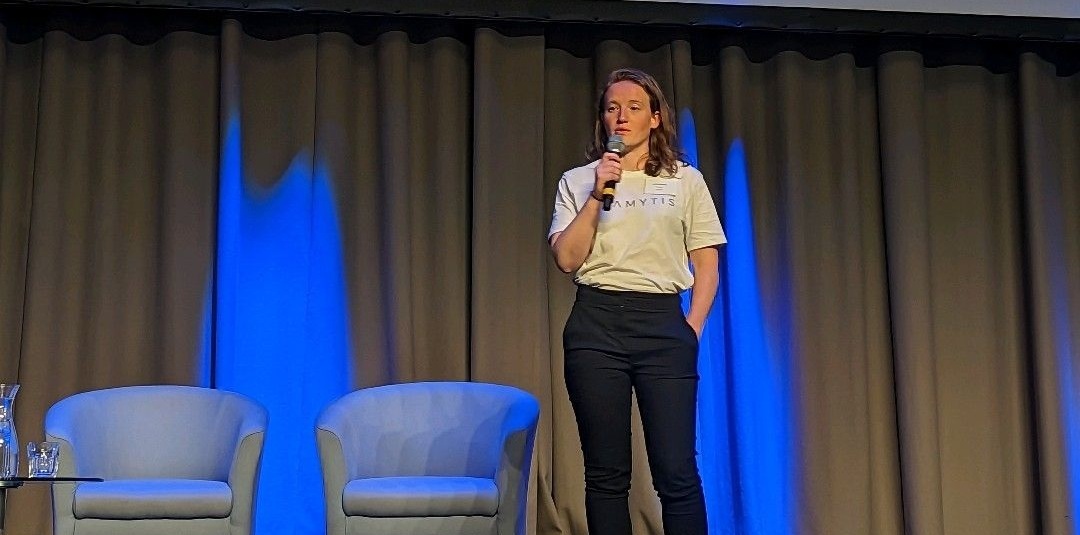
Hear from Chelsea:
The story had to change before the product could
The most useful thing Chelsea took home from her first Silicon Valley trip in 2025 was an uncomfortable one. Her pitch deck was pulled apart, and she's candid that the deck wasn't the only thing that got a rough ride. The story she was telling was too technical and too rooted in the findings of the PhD. Founders coming out of research will recognise the trap. Five years down in the weeds makes the detail feel like the point, when to an investor or a platform the detail is the last thing they need.
"The underlying tech remains, but the way that I'm thinking about it, the way that I'm trying to utilize it, and the gap that I'm trying to fill is, I think, just the next level compared to if I hadn't gone out to Silicon Valley." - Chelsea Jarvie, CEO, Neon Guard
So she brought the story up a level. The mission was already clear to her: keeping children and adults safer online without asking anyone to hand over their identity. What she needed was someone with no technical background at all to help her say it. She spent two days with a brand and marketing consultant working through what the business is for and how to tell it, and the guidelines that came out of that session now sit with her marketing intern, who joined through Strathclyde funding and has been rebuilding the website and running the social channels against them.
The clearest measure of whether a story is working is the questions it produces. Before, Chelsea was hearing that people didn't really get it. Now the question that comes back is why this doesn't already exist. Same technology, different framing, and a very different room.
"Last time I was going out with no real network, attending as many events as I could and what I discovered in Silicon Valley is that the place runs on warm intros." - Chelsea Jarvie, CEO, Neon Guard
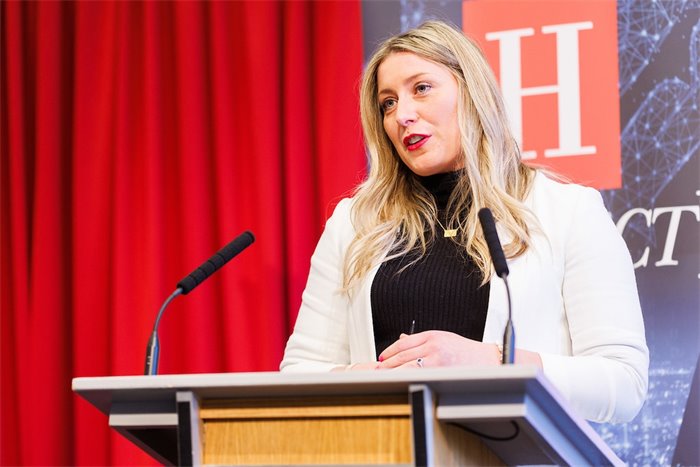
Going back with a different business
Chelsea was selected for Techscaler's fifth Silicon Valley cohort, which lands in San Francisco during SF Tech Week this October. She describes the company heading out this time as a completely different business from the one she took in 2025. Back then she was still working out her market position, how she'd get through regulation and how she'd build a deep tech product at all. She arrived without a network on the West Coast, so the first trip was spent building one from scratch: going to as many events as she could, meeting whoever was in the room and finding out by doing it which conversations moved the business forward and which didn't.
That groundwork is what she's building on now. It's also not how she plans to spend the fortnight this time. She now has Silicon Valley investors and advisors on board who weren't there a year ago, and she's started the work months early, getting calls in the diary before she flies so that the two weeks on the ground can go on coffees rather than cold introductions. Her advisors are already opening doors to people she'd never have reached on her own.
Part of the pressure is practical. With two young children at home, every day she spends away has to earn its place, and a fortnight in market is exactly the kind of window that rewards planning ahead. Part of it is strategic. Age assurance is a live conversation in APAC, across Europe and in North and South America, and Chelsea is deliberate about keeping across all of it. Silicon Valley, in her view, is where a startup with global ambitions can learn fastest at this stage, but it's a starting point. For Neon Guard to have the impact she wants it to, the company has to be looking everywhere.
"But I think Silicon Valley, as a startup that wants to have global impact, is where I can learn the most and get people with the most experience to help me on this journey." - Chelsea Jarvie, CEO, Neon Guard
The dataset problem
The MVP is still on track for Q4, and Chelsea notes that the road there has had headwinds as well as progress. The hardest of them is a problem specific to what she's building. To train the system, she needs a custom dataset, and that dataset has to include children. Getting kids to interact with the technology, even one built from the ground up to be anonymous, is difficult for good reason, and every jurisdiction she wants to collect from brings its own requirements around consent and ethics. She got a strong dataset together during the PhD under ethics oversight. What the product needs now is bigger, global and diverse, and that comes with a whole new layer of work.
Then there are school holidays, which she describes with some feeling as relentless. Summer has gone on building the technology so that data collection can start properly once term begins. A few people have told her the business is spicy: children, regulation and cybersecurity in one product. She doesn't disagree. The risks are real and they need addressing one at a time.
"It's kids, it's regulation, it's cybersecurity, it is a spicy business and there's risks that I have to address and having kids in the data set is one of those challenges for me." - Chelsea Jarvie, CEO, Neon Guard
A smaller pool, and the right one
Chelsea has spent around fifteen years in cybersecurity, most of that as one of few women in the room. She's not new to the headwinds that come with that. What's different now is the combination. Deep tech founder, solo founder, female founder, each carries its own friction with investors, and she's straightforward that all of it is playing a part in her journey. Some of the questions she gets asked are questions she knows other founders wouldn't face.
Her response has been to treat fit as a strategy. She's looking for investors who back her as a founder and believe in the mission, because those are the relationships that hold up through a long deep tech build, and narrowing the field to find them is a trade she's happy to make. The same filter applies to advice. Early on she was encouraged to fund the first stage through friends and family, an approach that works for founders with that kind of network and didn't fit hers. Later, with good intentions, she was advised to bring in a male co-founder to strengthen the company's credibility. It wasn't advice she chose to follow, and she's open that it says more about where the wider landscape still is than about Neon Guard.
"So there's ups and downs, there's pros and cons, and the investment journey is tough, but I've also had people invest who believe in me as a founder and in NeonGuard."
Her broader view is a constructive one. She's encouraged by how many female founders and all-female teams she now sees building companies, and by how openly funding and attitudes get discussed. The question she keeps coming back to is who else is listening. Her years in cybersecurity taught her that a community talking among itself can only shift things so far, and that real progress towards a level playing field comes when people outside that community want the change too. She sets that alongside the support she's had. She has a strong advisory board spanning the UK and the US, and she's had investors come in because they believe in her as a founder.
She's been a STEM ambassador for twelve years, and her advice to a younger woman on a similar path has changed as her own experience has. What she'd say now is that if you're good at something and you enjoy it, don't let anyone make you feel you don't belong there. External perceptions can make you wobble, and she's had that herself. Holding your place matters for you, and it matters for the women coming up behind you who need to see someone doing it. Lean on the ones who've been through it already. The people she's looked up to have changed as her path has, and she thinks that's how it should work.
"I think it's about believing in yourself, staying true to yourself, and holding the space that you have, I think, is really, really important, even though sometimes that can feel really tough." - Chelsea Jarvie, CEO, Neon Guard
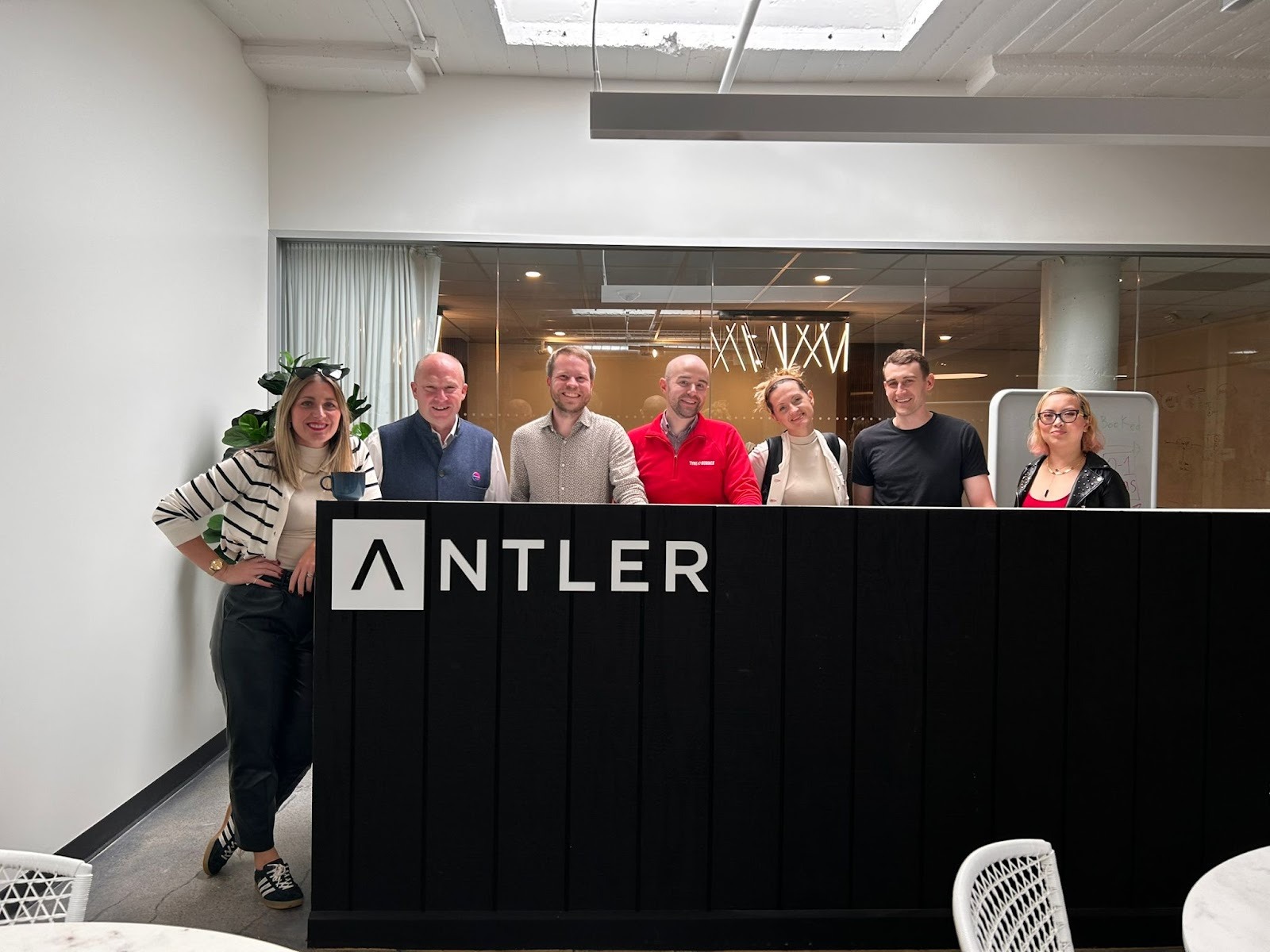
Deciding alone
Chelsea's take on why early-stage founding feels isolating is a practical one. The problem is rarely the workload on its own. It's the volume of input that arrives with it. There's rejection to absorb, and alongside it a steady flow of advice, much of it unsolicited and some of it contradictory. Without a co-founder to talk it through with, all of that has to be processed by one person and turned into a decision, and it's easy to stall at the processing stage. She's learned to recognise that as paralysis by analysis and to treat it as a signal. When the information isn't going to get any clearer, the job is to choose a direction and commit to it, and to handle whatever follows once it's in motion.
The second part of her method is a deliberately built peer network. She's kept in touch with several founders from the 2025 Silicon Valley cohort, and with one of them she trades voice notes almost daily on the highs and lows of the week. Being in another country together and working through the same events and the same problems created the kind of bond that lasts, and she counts it among the most durable things she brought home. She's equally deliberate about who gets a voice in that circle. Advice is only useful when it fits your business and your situation, so she listens widely and applies it selectively.
"So listen, but be selective and kind of make your own choices and decisions." - Chelsea Jarvie, CEO, Neon Guard
The hardest decisions, when she's asked, aren't single moments. They come every day, for a long time, because in the early stage everything competes and everything needs doing well right now. And they reach beyond the business. Waiting to find out whether the money lands, whether the contract lands and whether the product lands is a grey area that a whole family lives in, and she doesn't pretend otherwise.
"Is it a UK commercial product or is it a global commercial product? If it's global, then think about the commercial terms and trying to get funding from outside of the UK as well to give the business the best shot." - Chelsea Jarvie, CEO, Neon Guard
Where Neon Guard goes from here
The team that didn't exist in April is starting to take shape. Chelsea has brought on a Chief of Staff, who has taken on a large share of the day-to-day and is working alongside her on the fundraise, on conversations with regulators and on landing pilot customers. An AI specialist is now working through the technology built during the PhD to strengthen it and bring the MVP closer. She has contractors in place on the technical side and is talking to more, looking for people who understand the mission before anything else. That's something she says you can tell quickly, often from someone's own experience online or from a real conviction about privacy. Many of the people who've stepped forward to help have been mothers of teenagers who've seen what poor safety controls look like up close.
Since the spring, Neon Guard has also been in the innovation suites at the Global Age Assurance Summit, holding closed-door meetings with some of the largest technology companies in the world about where continuous age intelligence fits into their platforms. Those conversations are ongoing. In parallel, Chelsea has been speaking with the ICO and Ofcom about where the technology sits in an ecosystem that's changing constantly as new laws come in.
Through Techscaler, she's had access to Entrepreneurs in Residence, and she's clear about the value of that kind of sounding board for a first-time product founder. She's run consultancy businesses before. Raising investment and taking a product to market are new, and having people to talk to who've done both has helped close some of the gap between what she knows and what she doesn't yet know she needs to.
"So I think there's so much that I don't know that I don't know, and that's where the EIRs and Hannah in particular has been very helpful for me on this journey." - Chelsea Jarvie, CEO, Neon Guard
Her advice to researchers weighing up whether to commercialise is unambiguous: do it. Research that stays in a paper doesn't change anything. Her one caveat is to be honest early about how big it could be, and if the answer is global, to think about commercial terms and funding sources beyond the UK from the outset.
This time next year, she wants Neon Guard's MVP in the market with paying customers and a team on payroll, funded for a good stretch of runway, with the product out there doing what it was built for.
For the first chapter of Neon Guard's story, from the PhD to the decision to build a company around it, read Techscaler's April case study. Click here to follow Neon Guard's progress on LinkedIn.

.png)
.png)


.png)





.png)


